Release Register
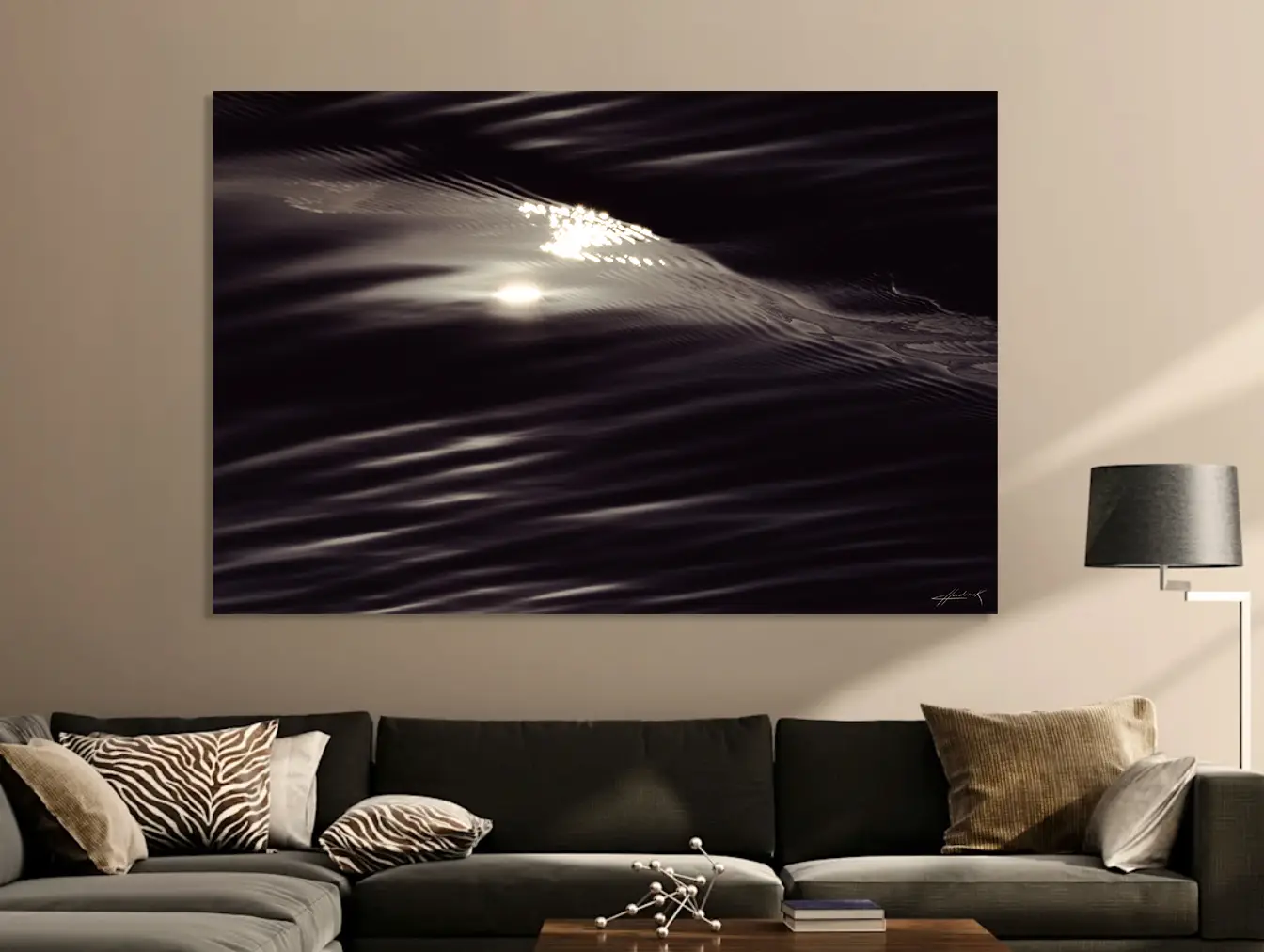
At first glance, a printed image looks seamless. Under magnification it dissolves into thousands of tiny dots, cyan, magenta, yellow, and black, angled against each other to create the illusion of one continuous color. This process, halftoning, relies on controlled imperfection.
Rosette takes its name from what happens to those same grids under magnification. Out of register, they throw off a moiré, a flickering interference pattern. Printers angle the grids at least thirty degrees apart to avoid that flicker. Angled correctly, they settle into a rosette, the balanced pattern, not the interference.
Chadwick reads this mechanism as a model for a fractured, overlapping society, and as a record of his own life and the world he sees. Misalignment becomes social noise, division, inequality, and disconnection. Balance becomes what each piece seeks. Every work pushes a grid toward a subject and lets the result tell its story.
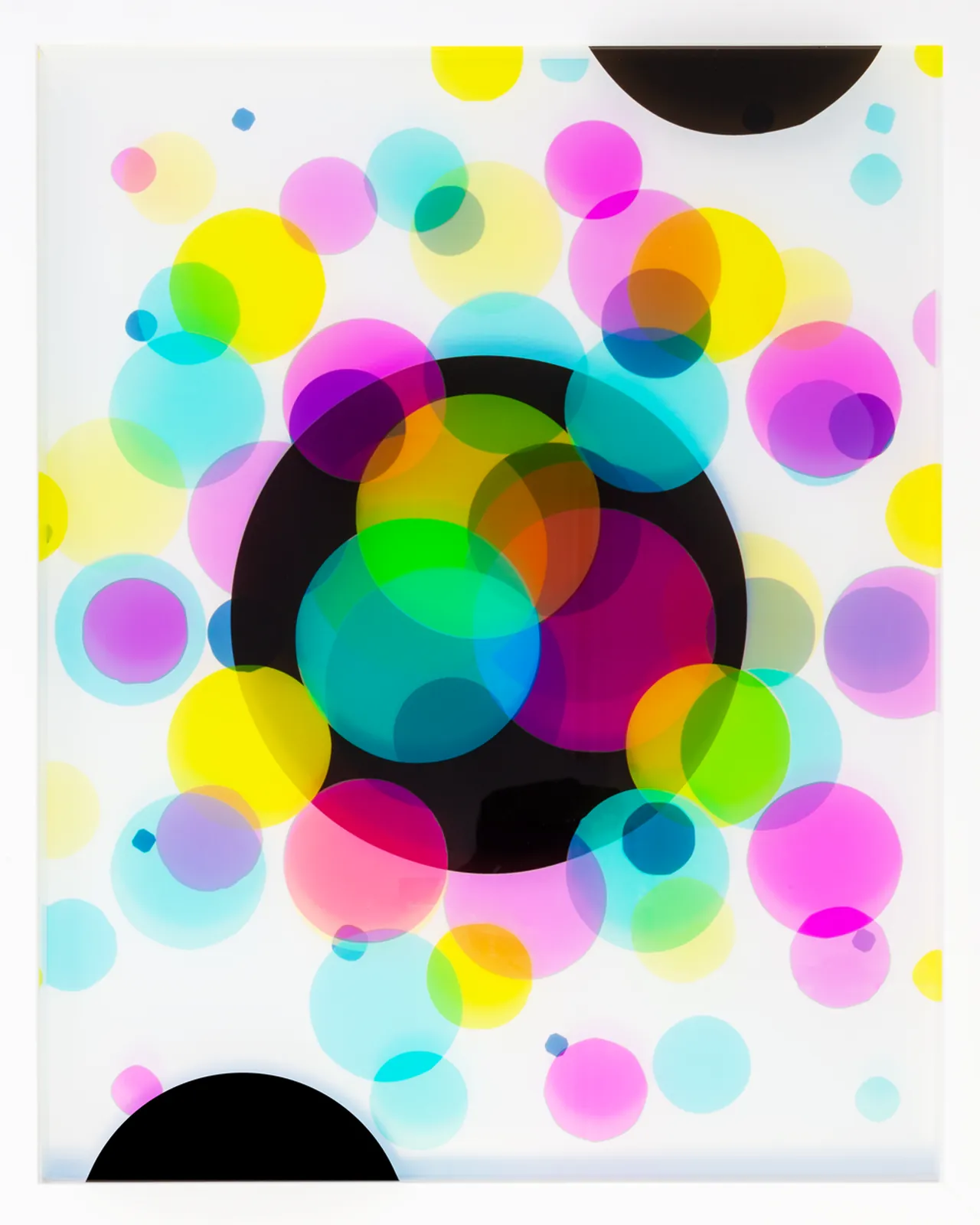
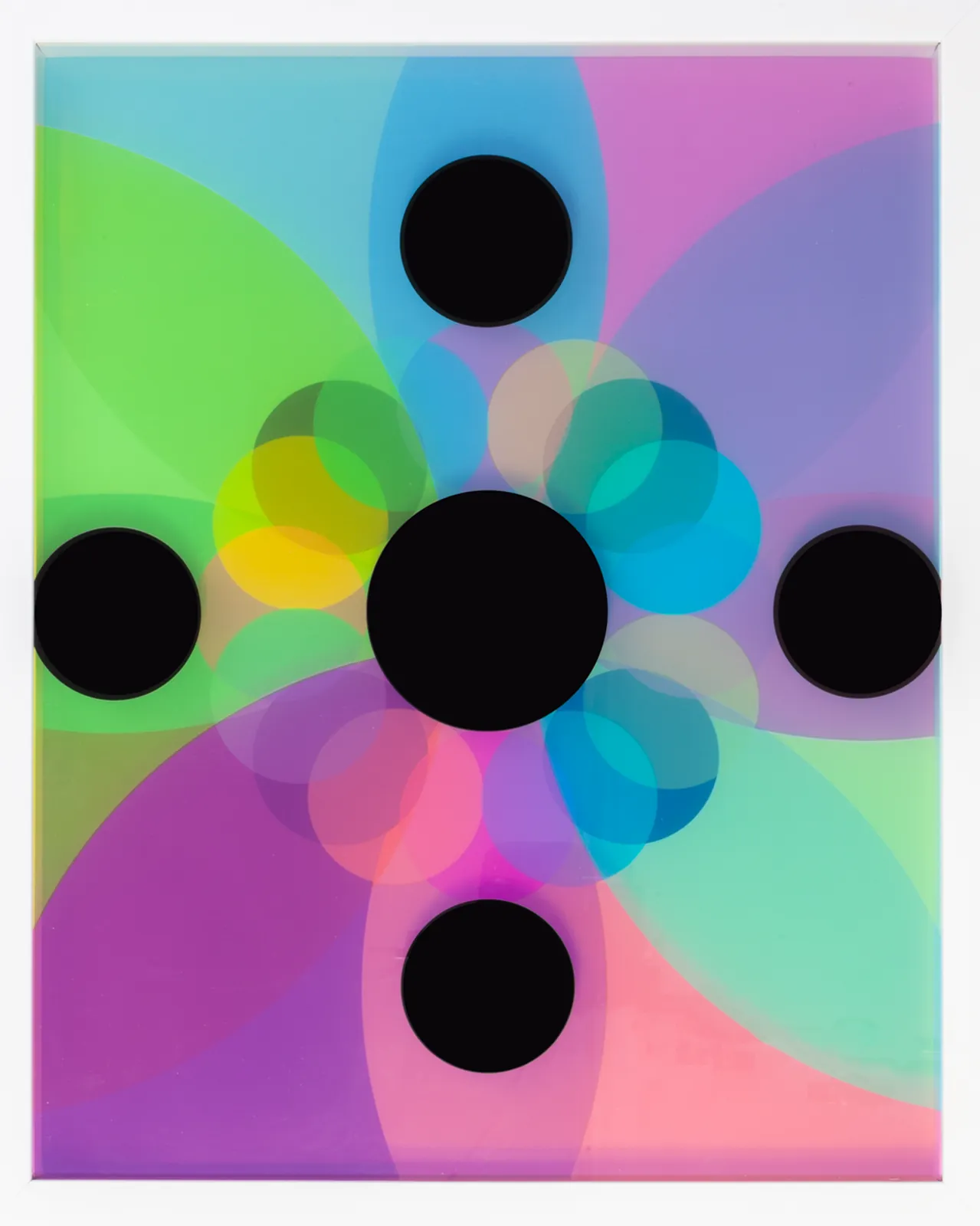
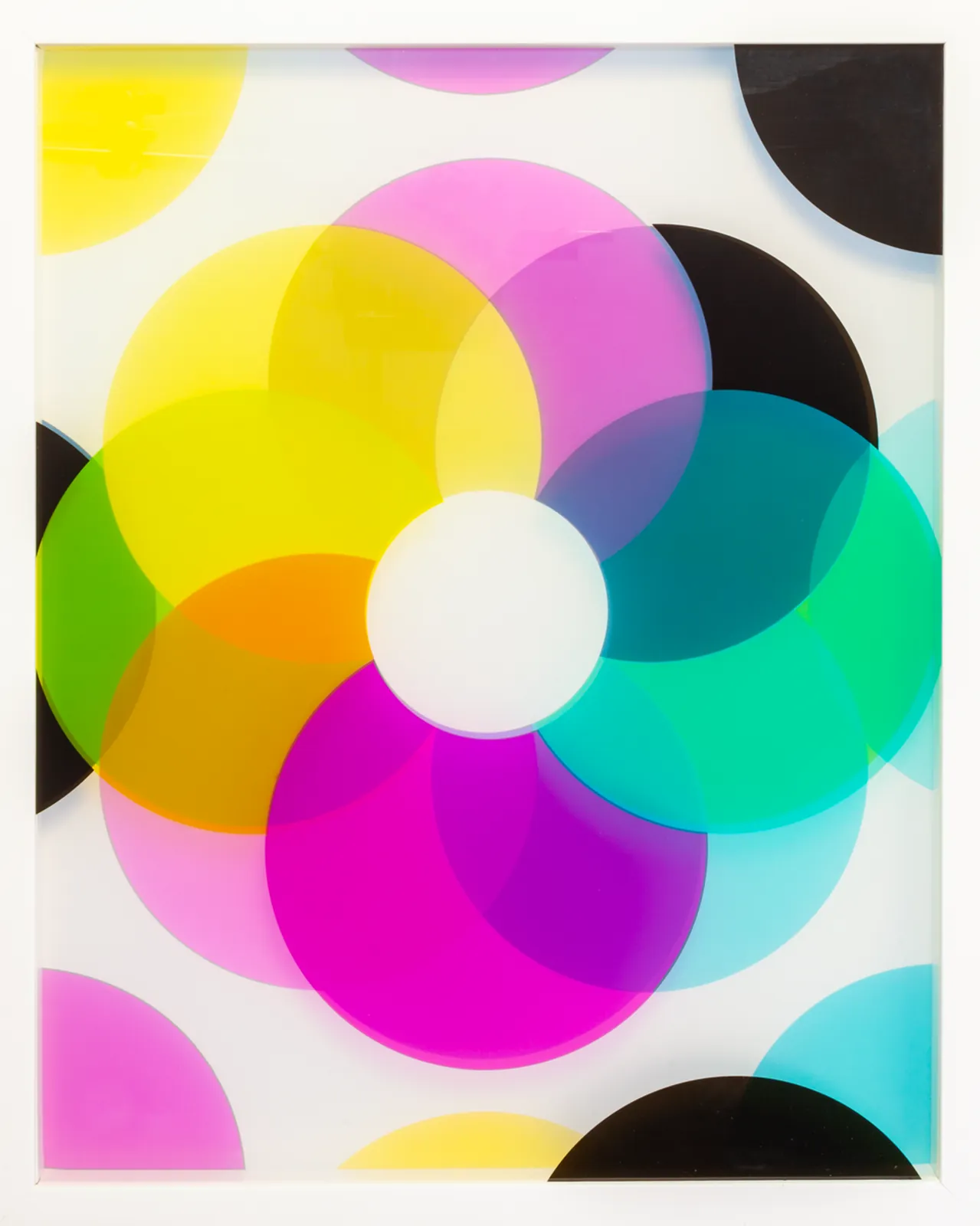
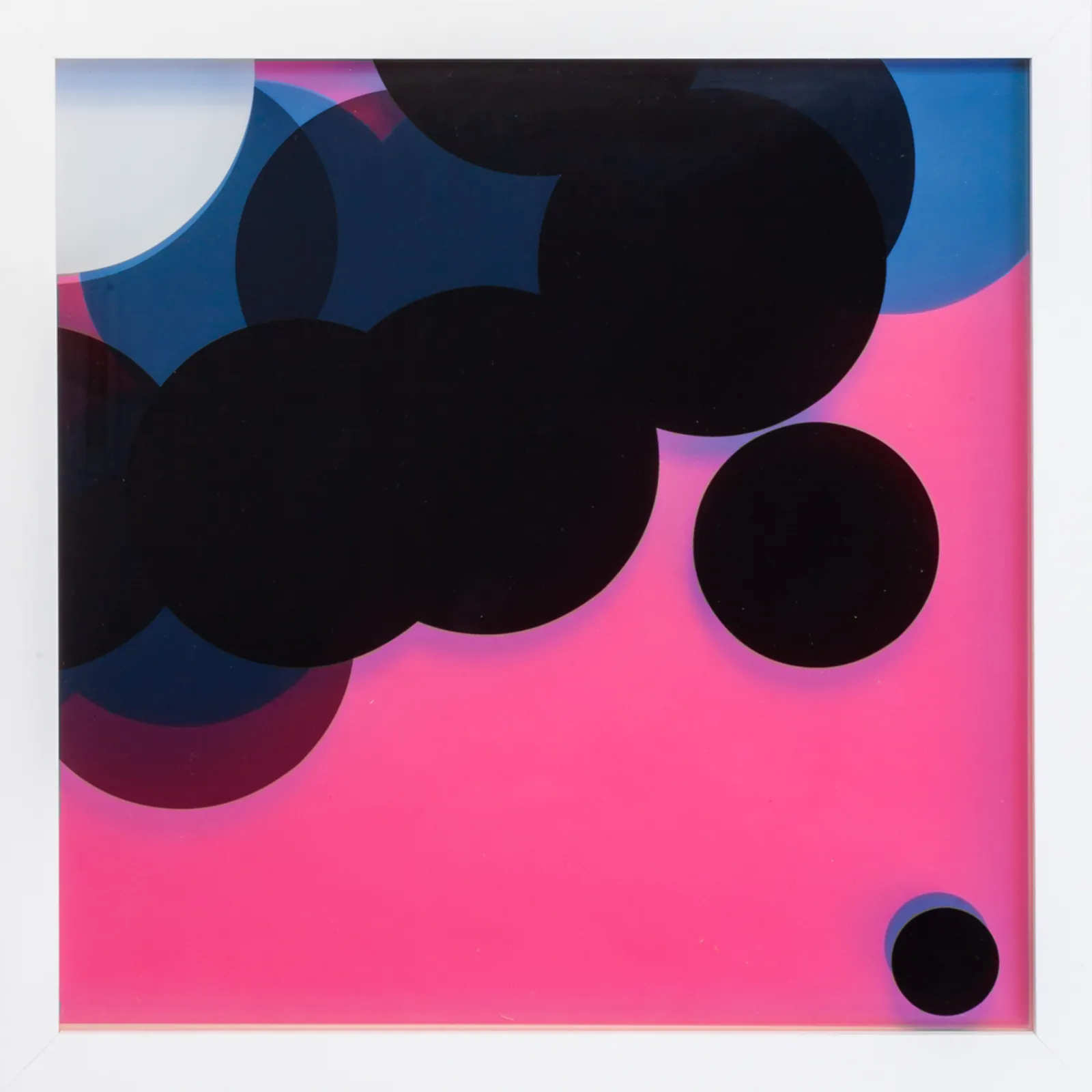
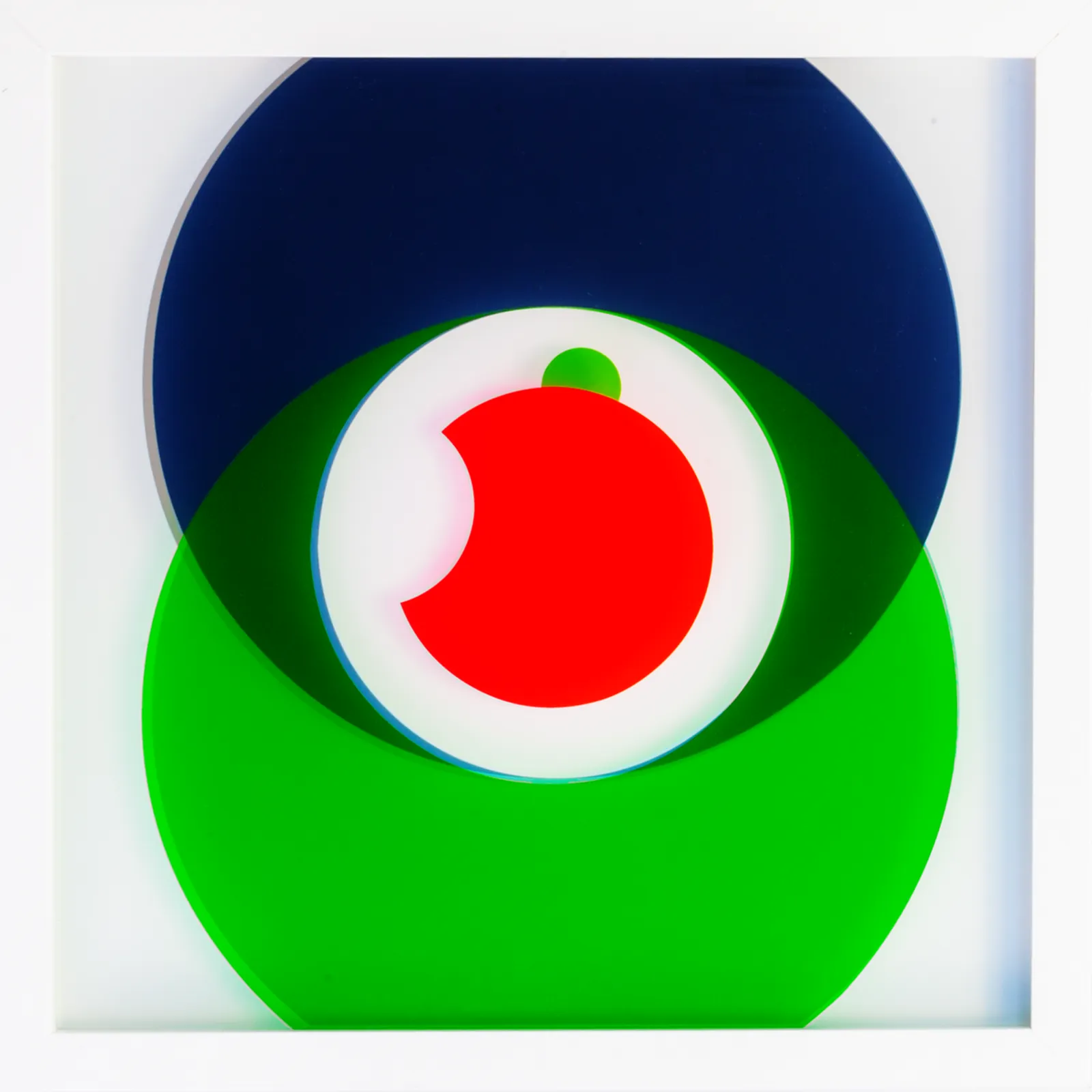
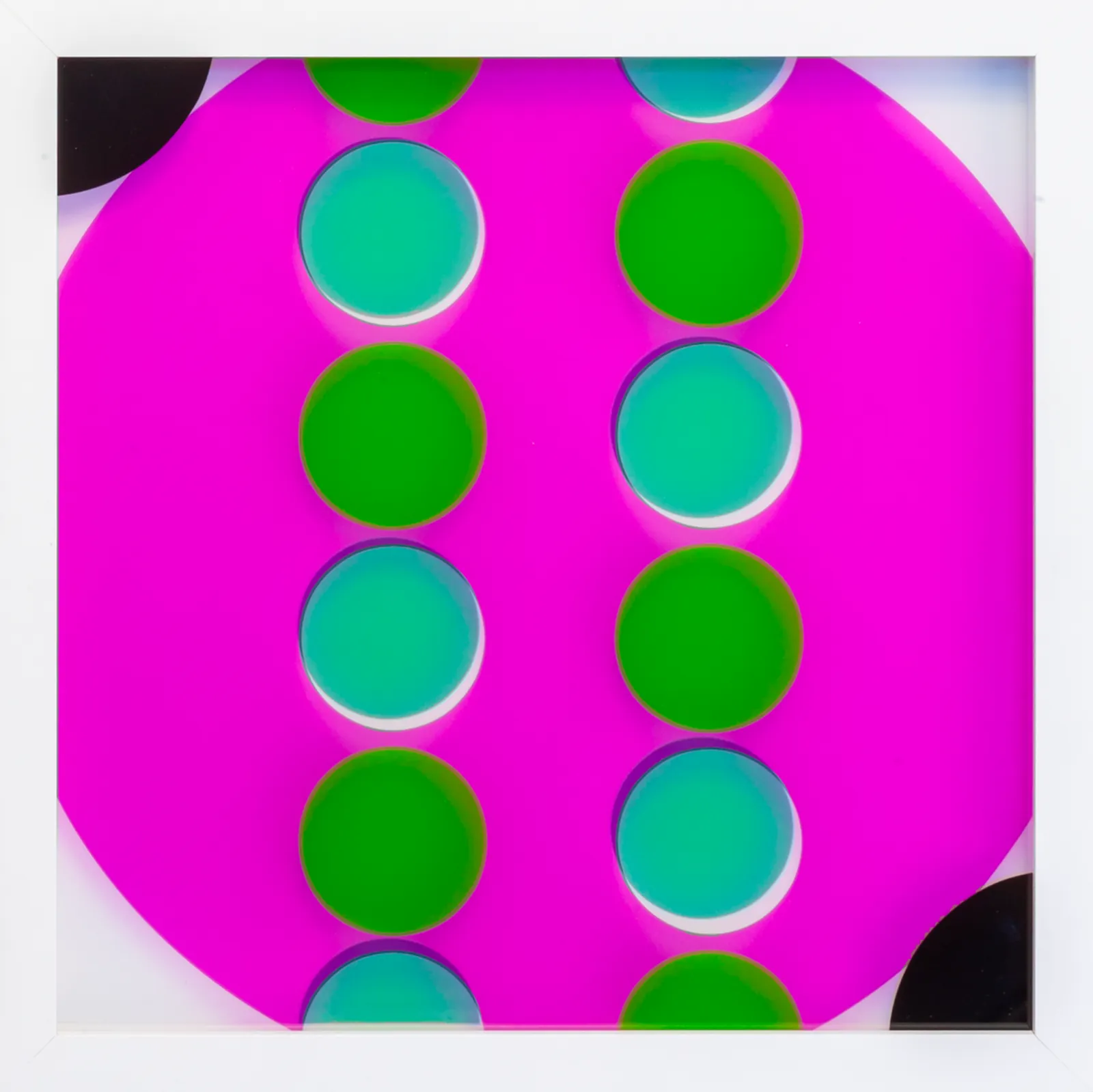
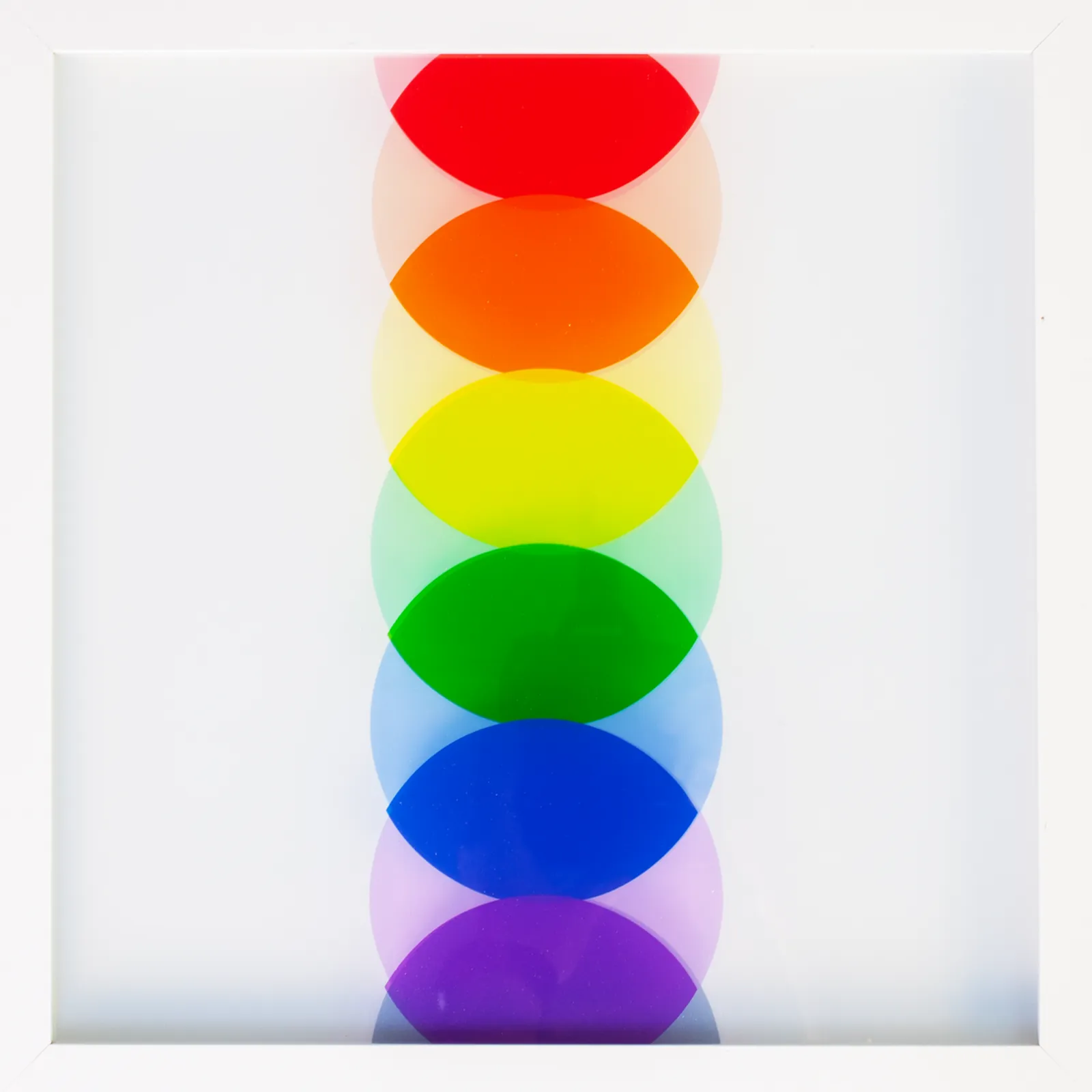
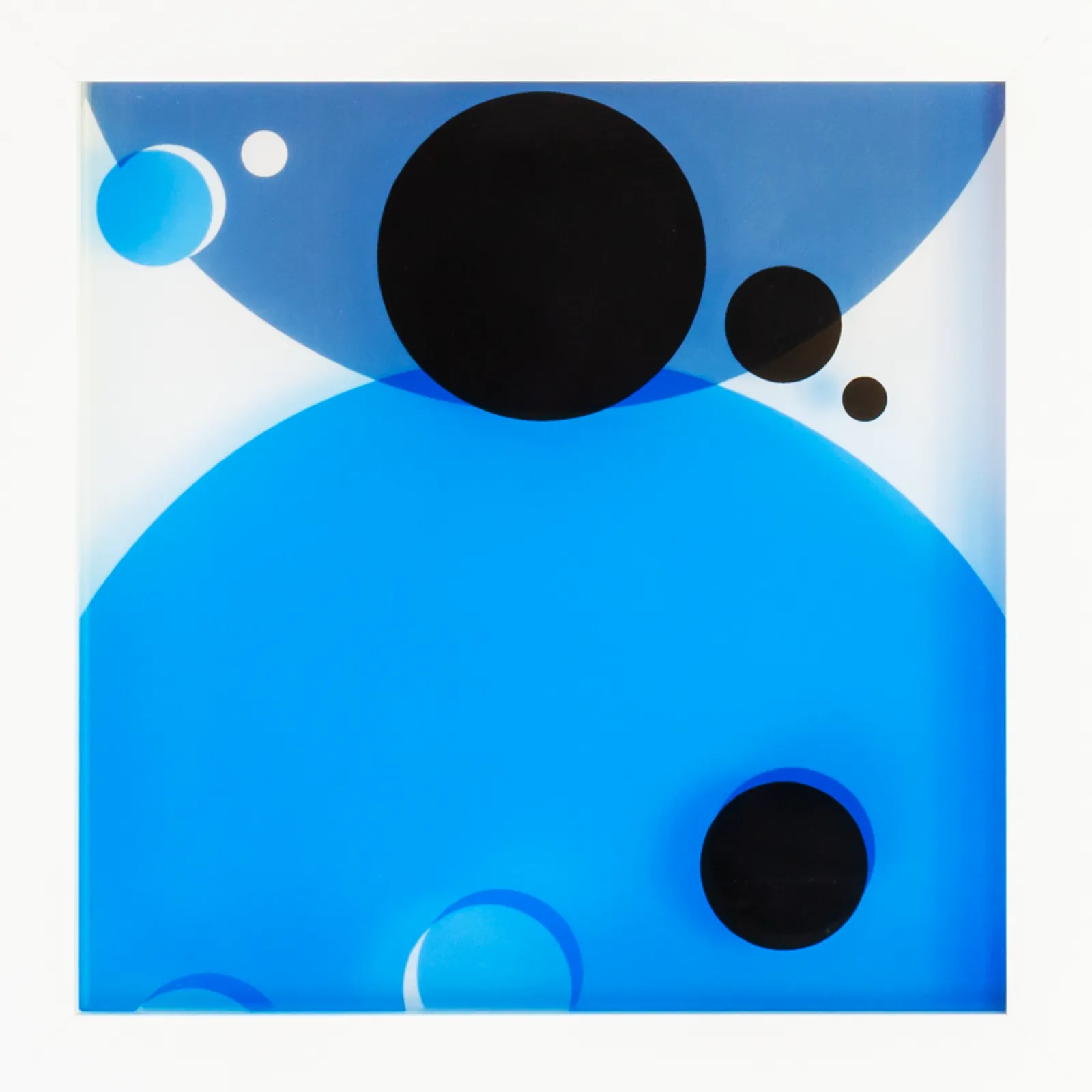
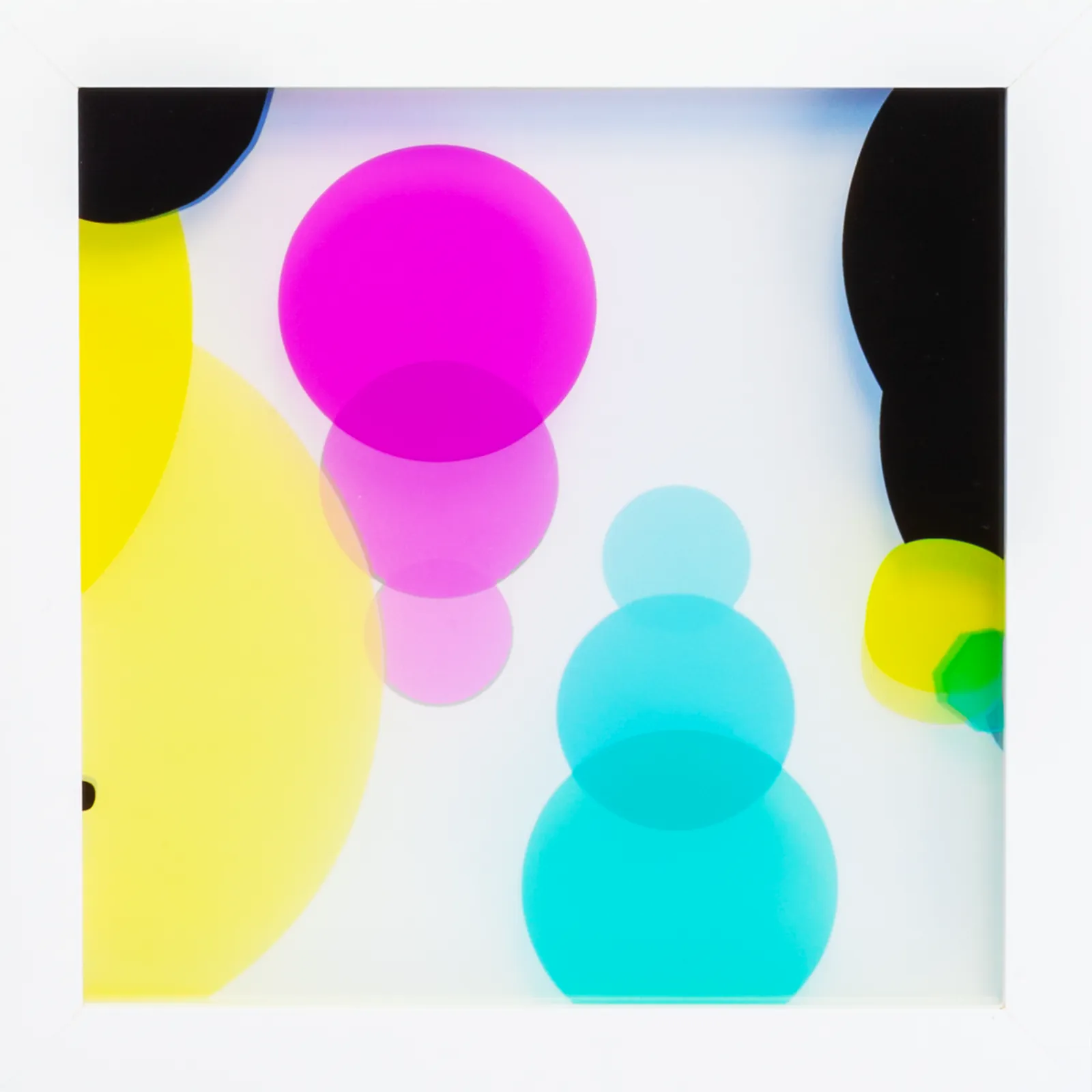
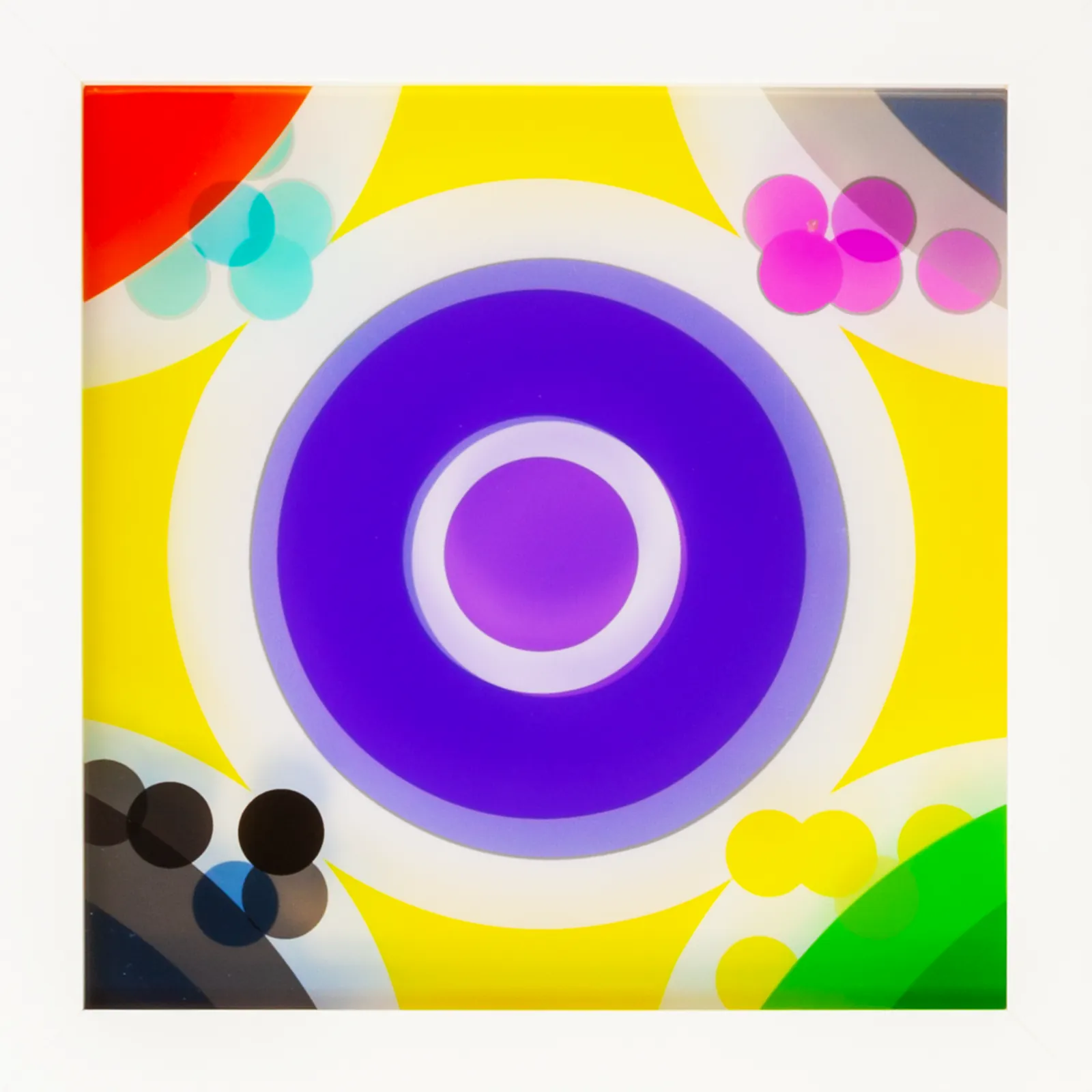
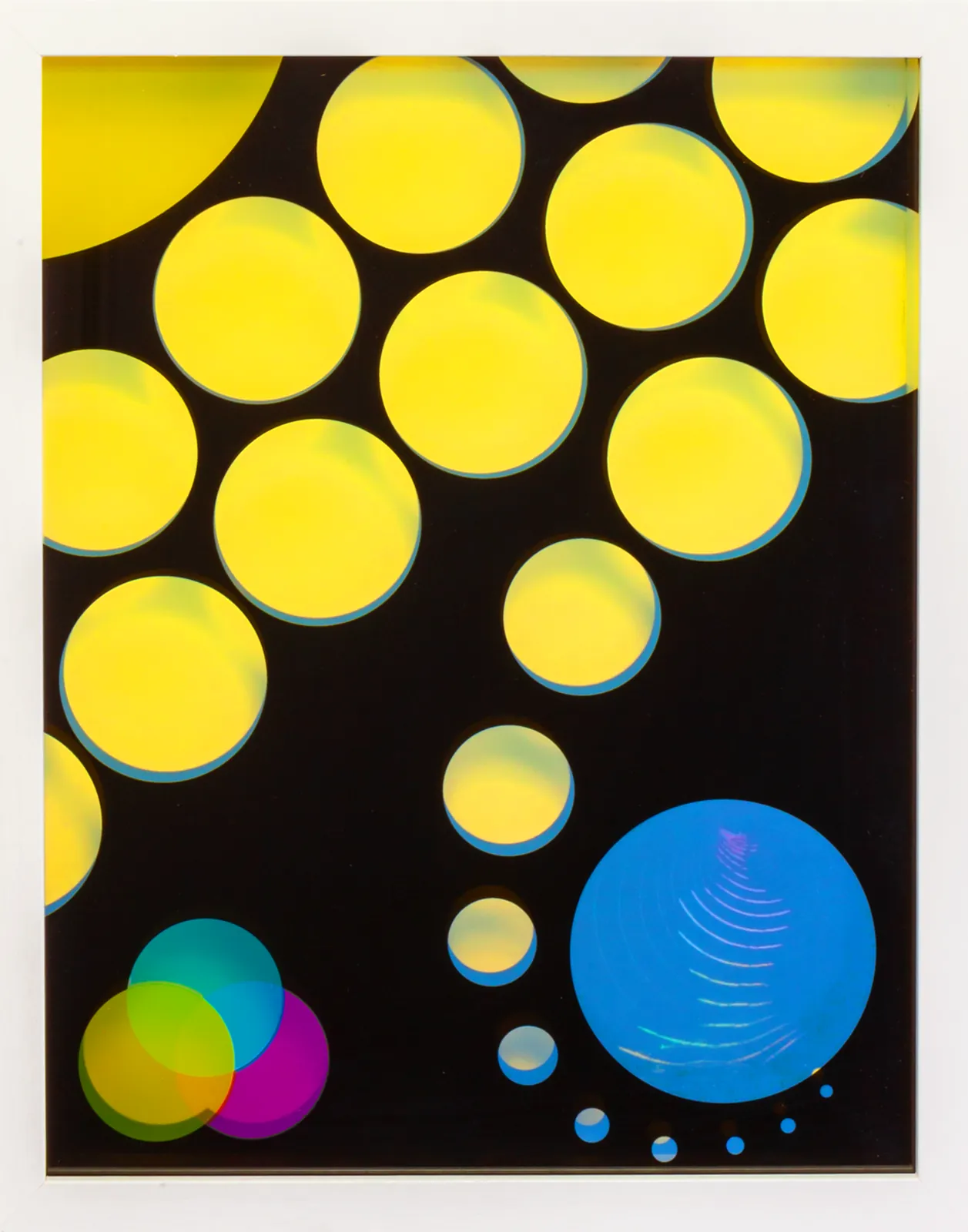
Overlapping halftone screens are angled to avoid the harsh interference pattern called a moiré, settling instead into the softer form printers call a rosette. The large black dot at the center represents the top one percent of global wealth, while the three perfect circles within it represent that one percent's certainty in itself. Everything else scatters outward, with the distance from each dot to the center reflecting its distance from that wealth.
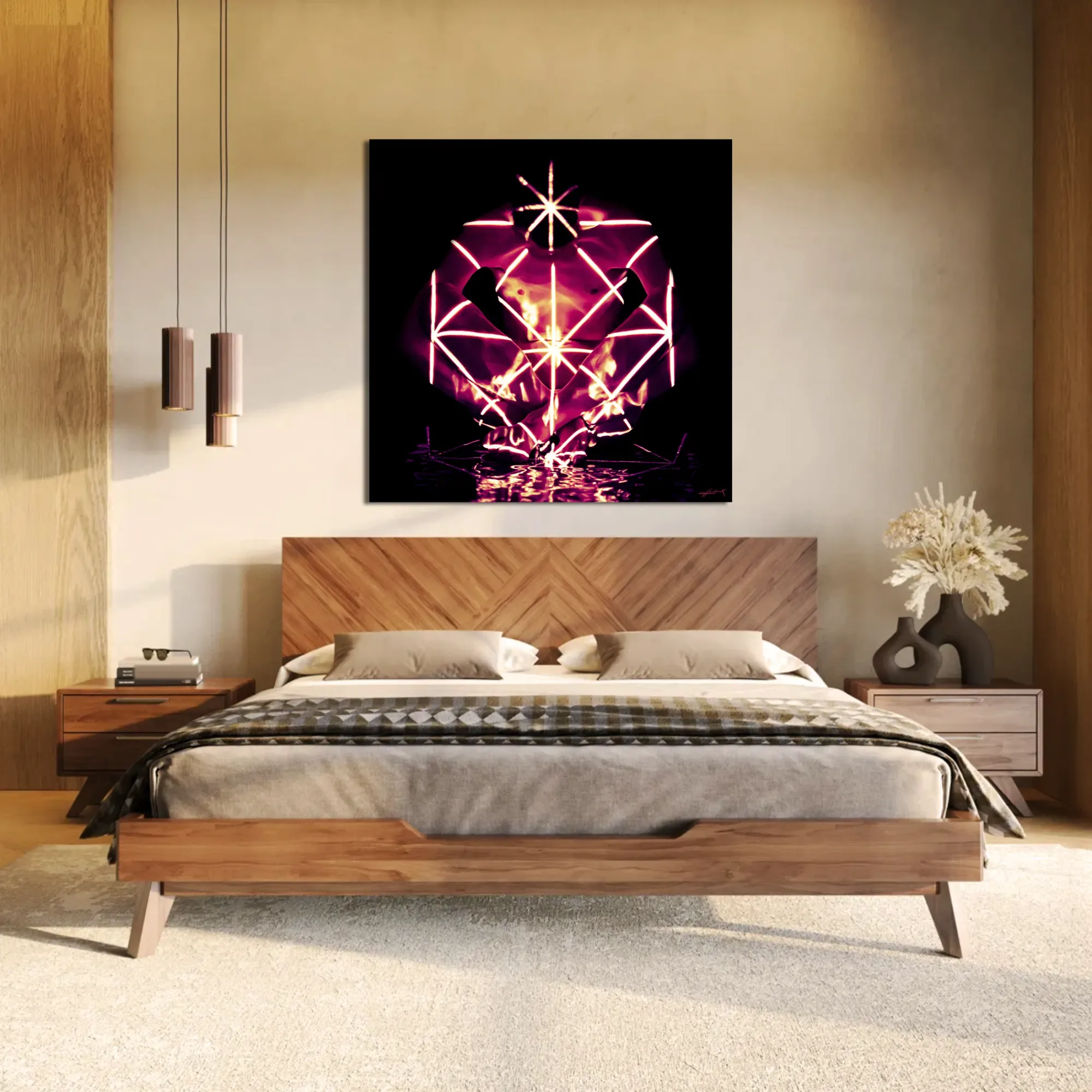
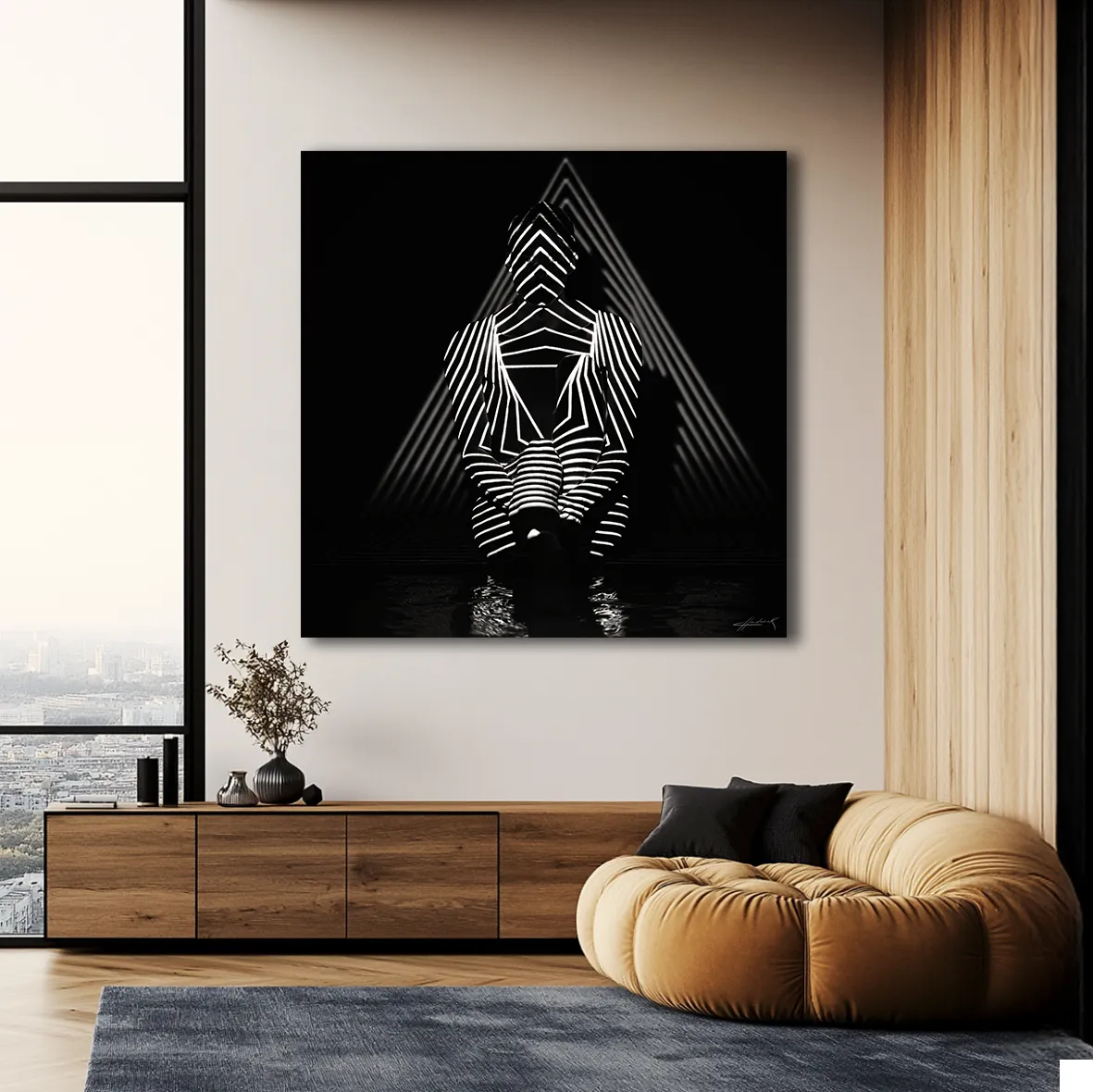
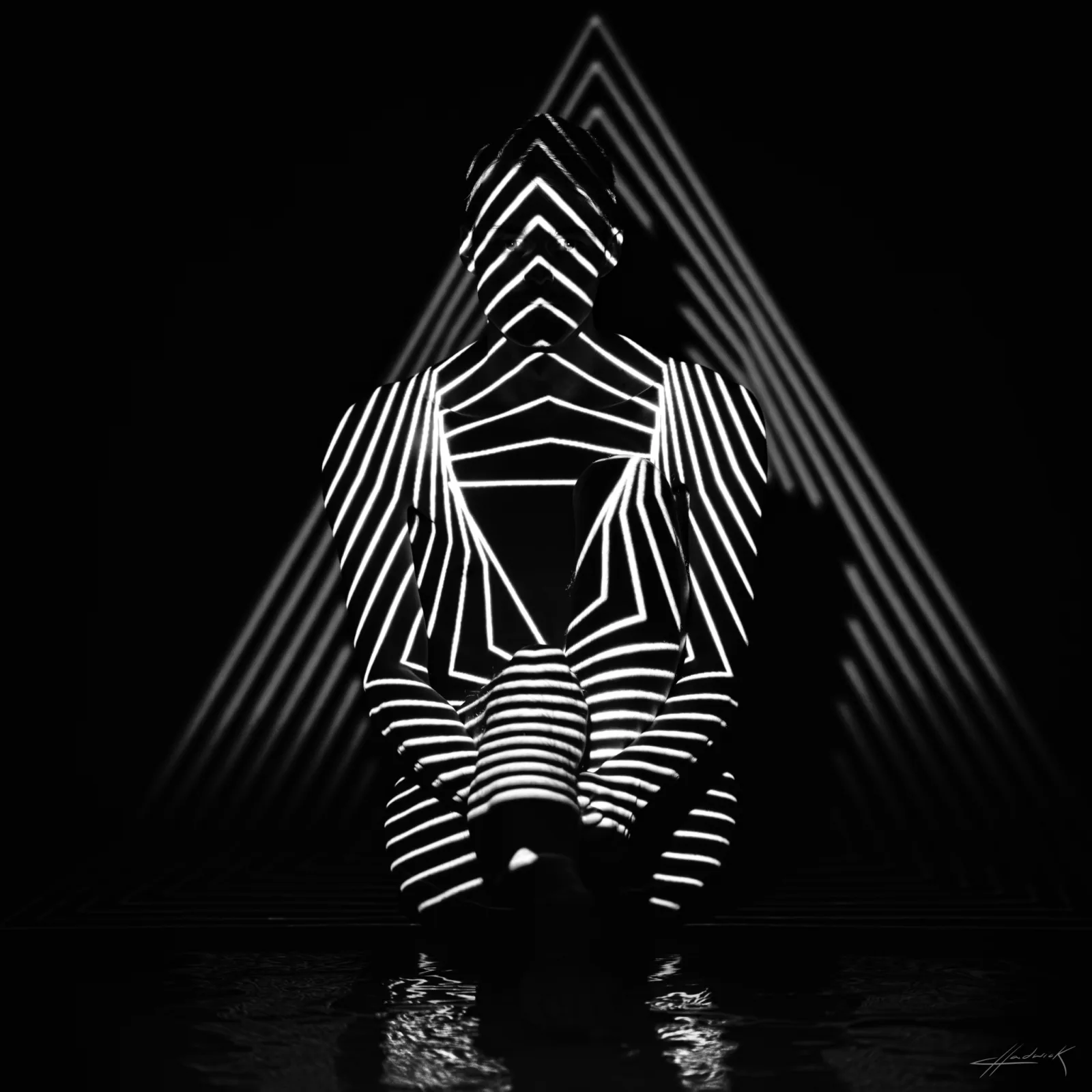
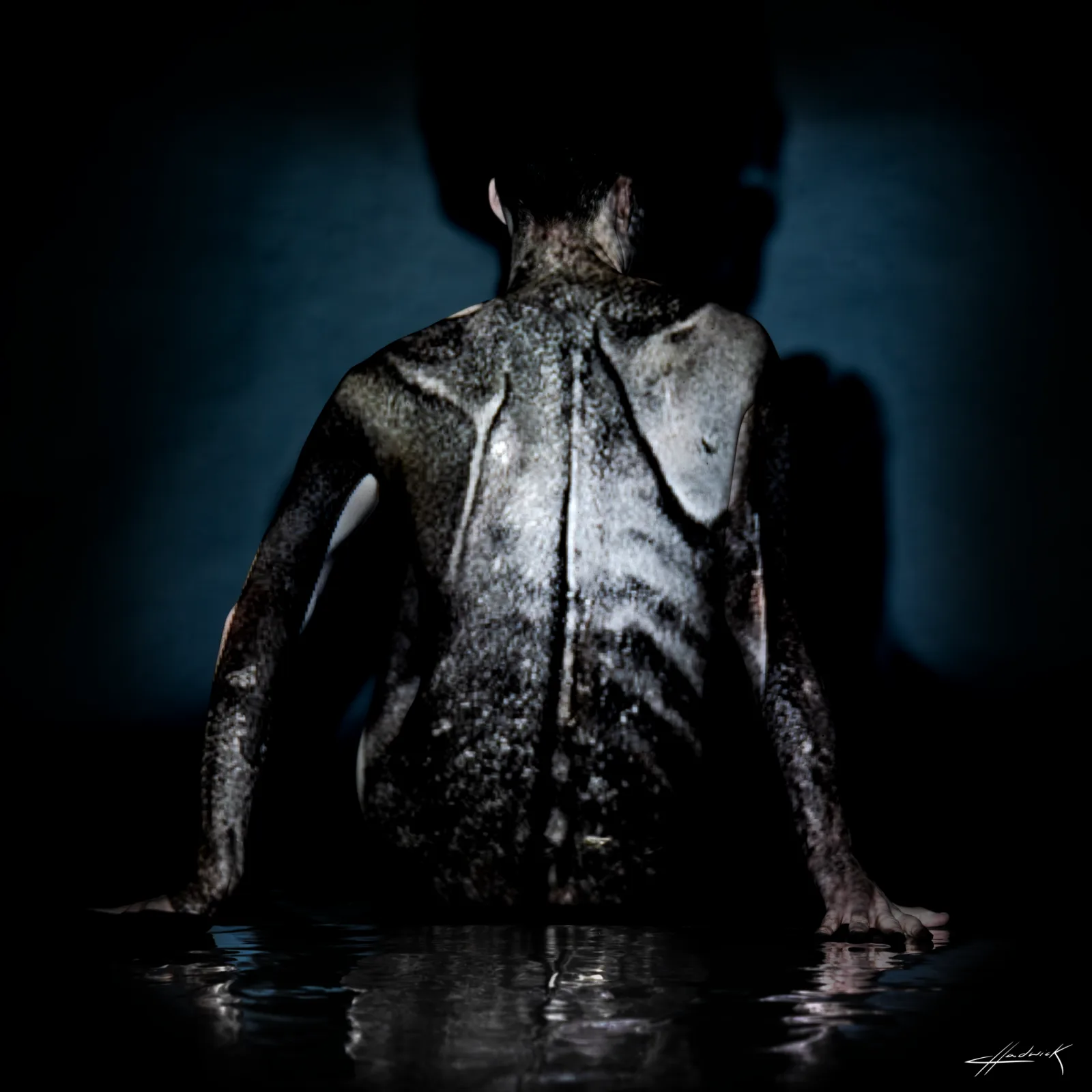
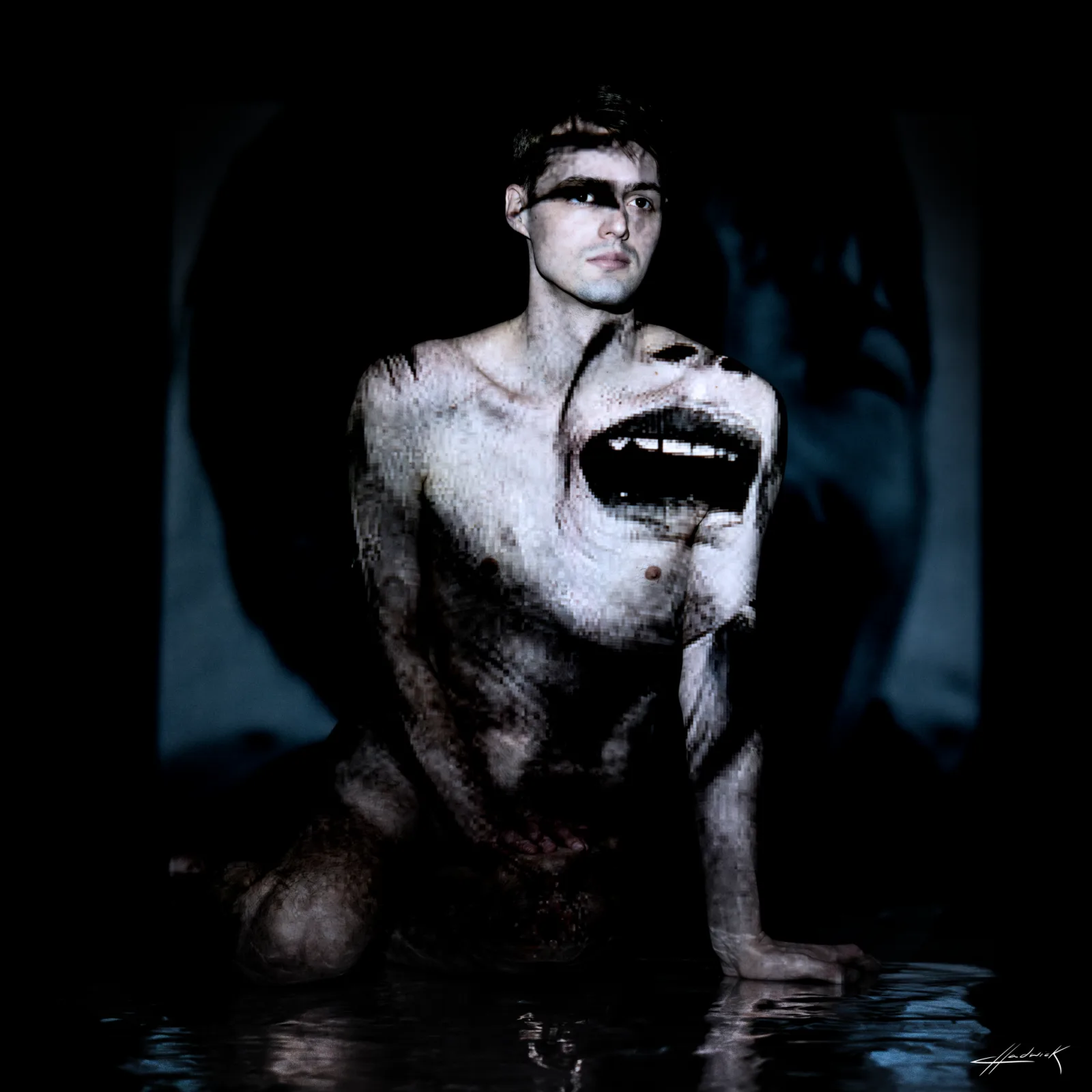
Double Exposure is about unity: what it takes, and what stands in its way. Chadwick researches real images of war, starvation, suffering, and racism, some well known, some forgotten, and projects them onto a human body, then photographs the result against a reflective surface that runs through the whole series. The title carries a dual meaning: the subject is exposed physically under that projected light, and emotionally, becoming a mirror for whoever is looking. The point isn't sexuality. It's vulnerability. Nine works stay purely geometric, drawn from Chadwick's interest in light, space, science, and technology, and draw the viewer in through beauty. Two works break the pattern, trading geometry for the real photographs the series is built around, harder to look at. They show what still needs to be fixed before true unity on this planet is possible.
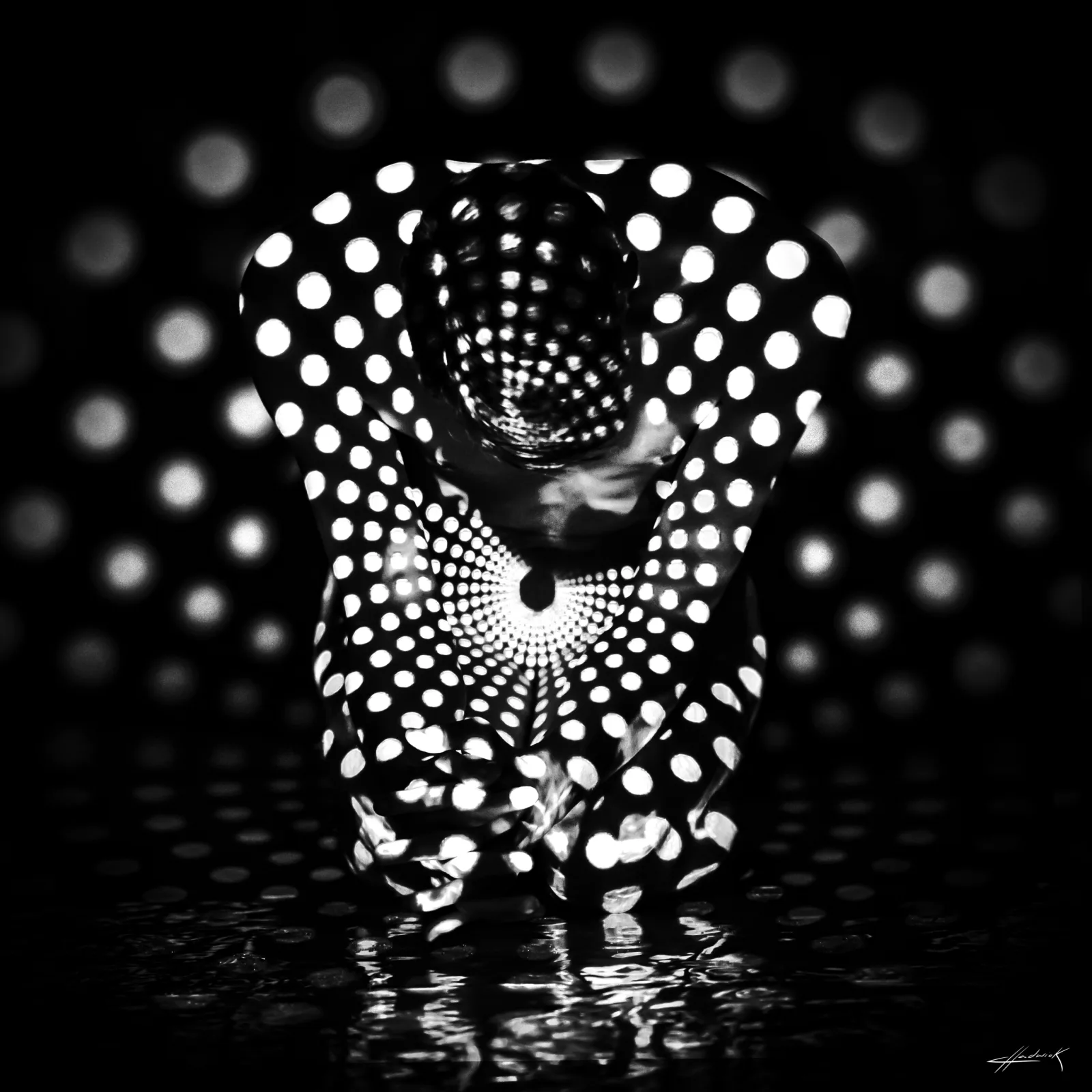
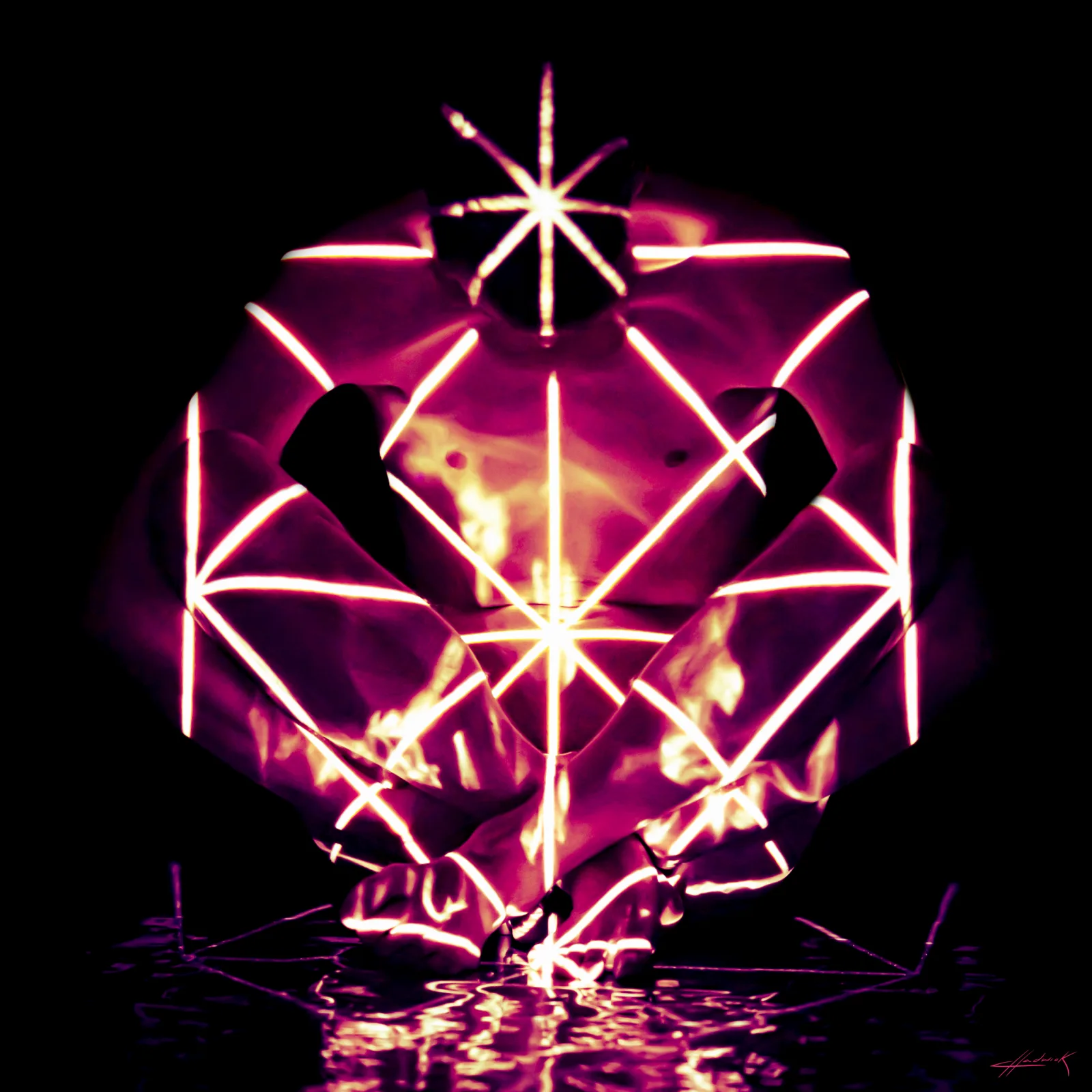
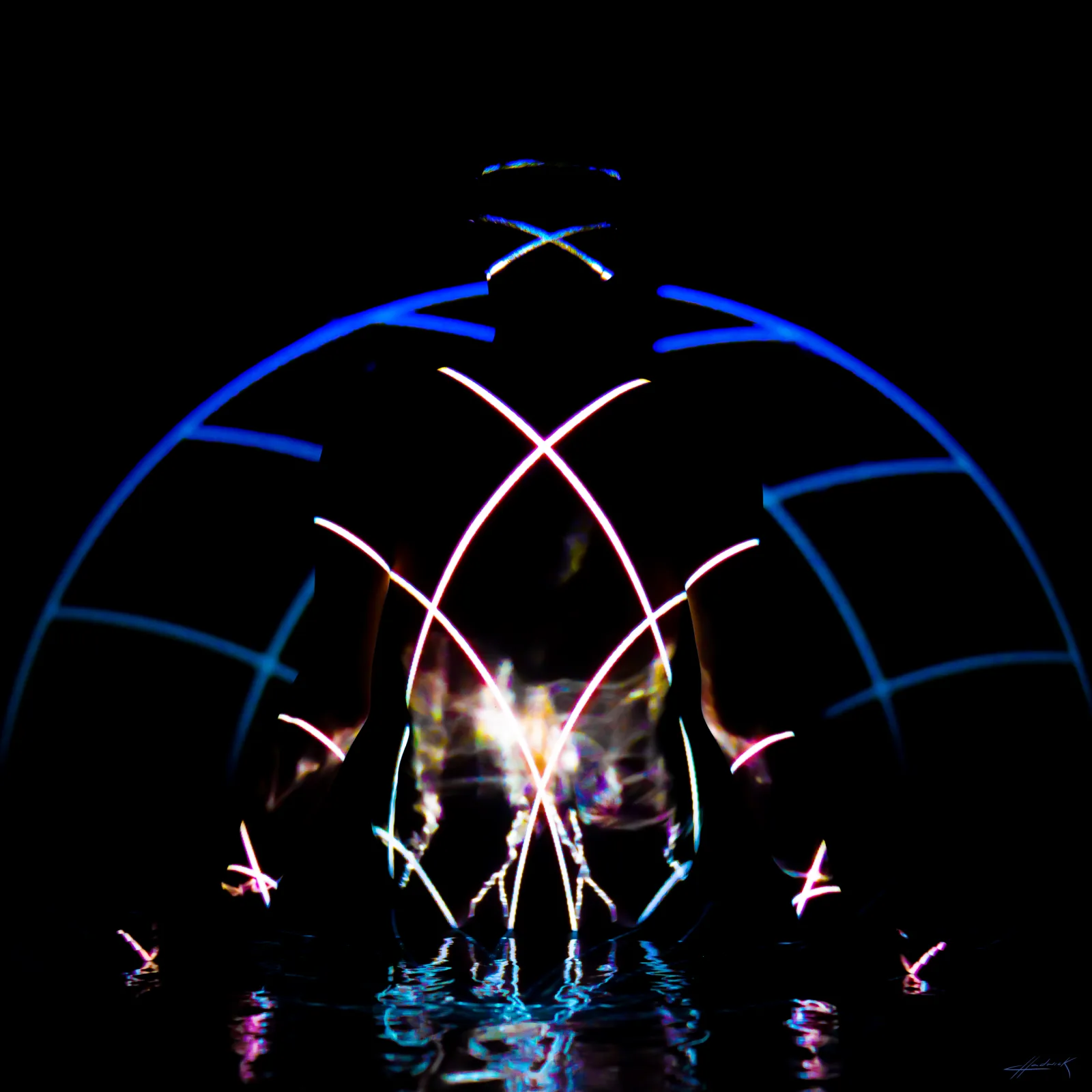
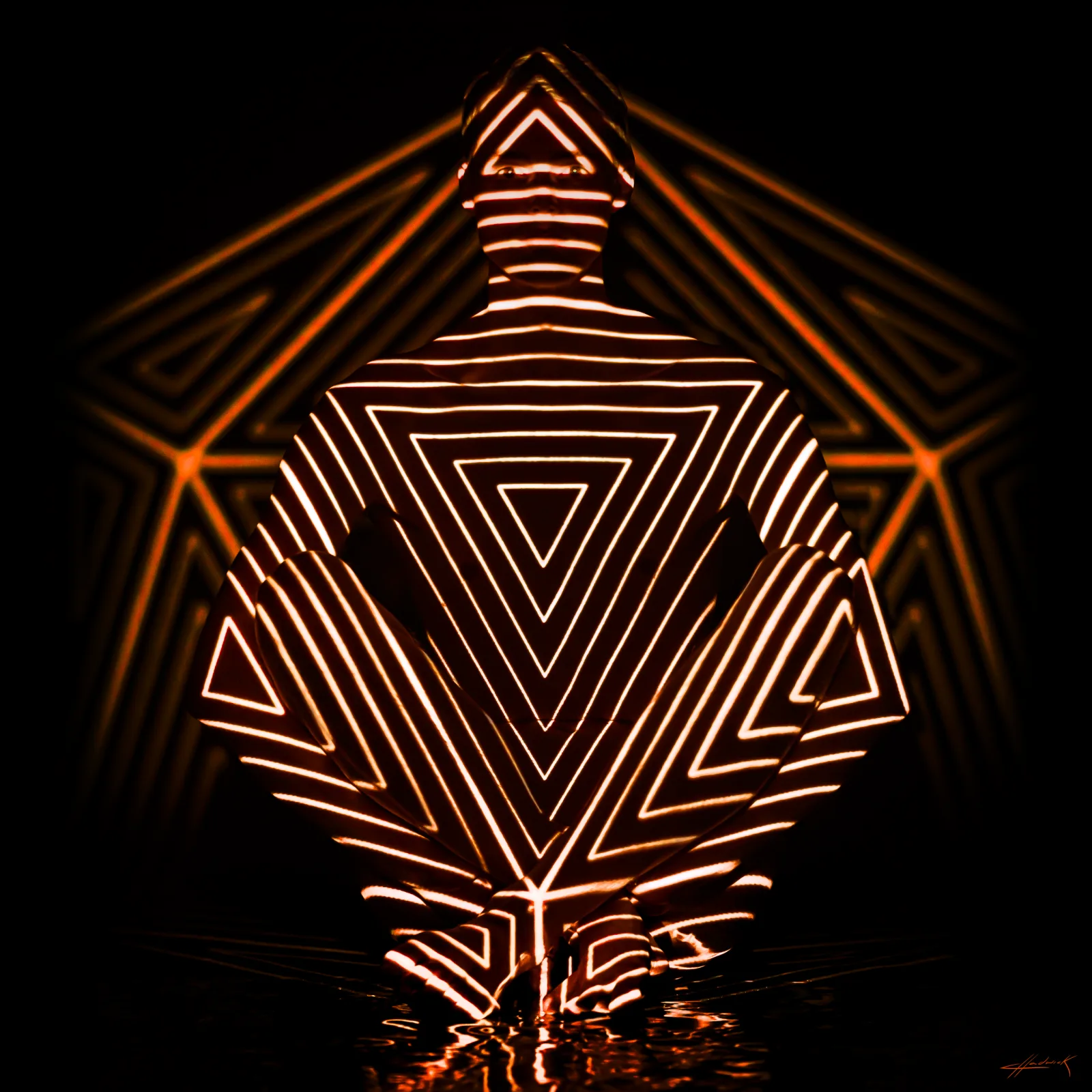
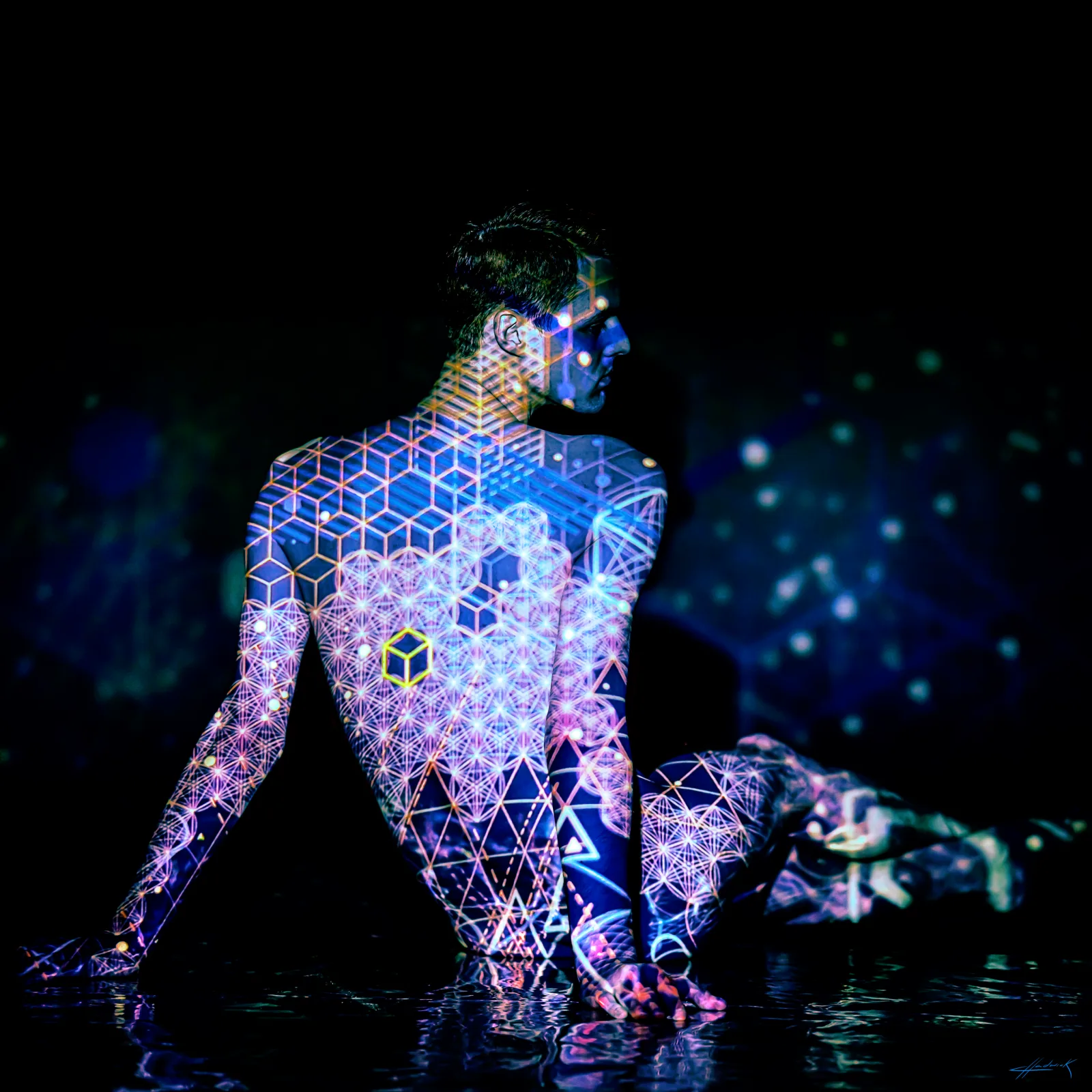
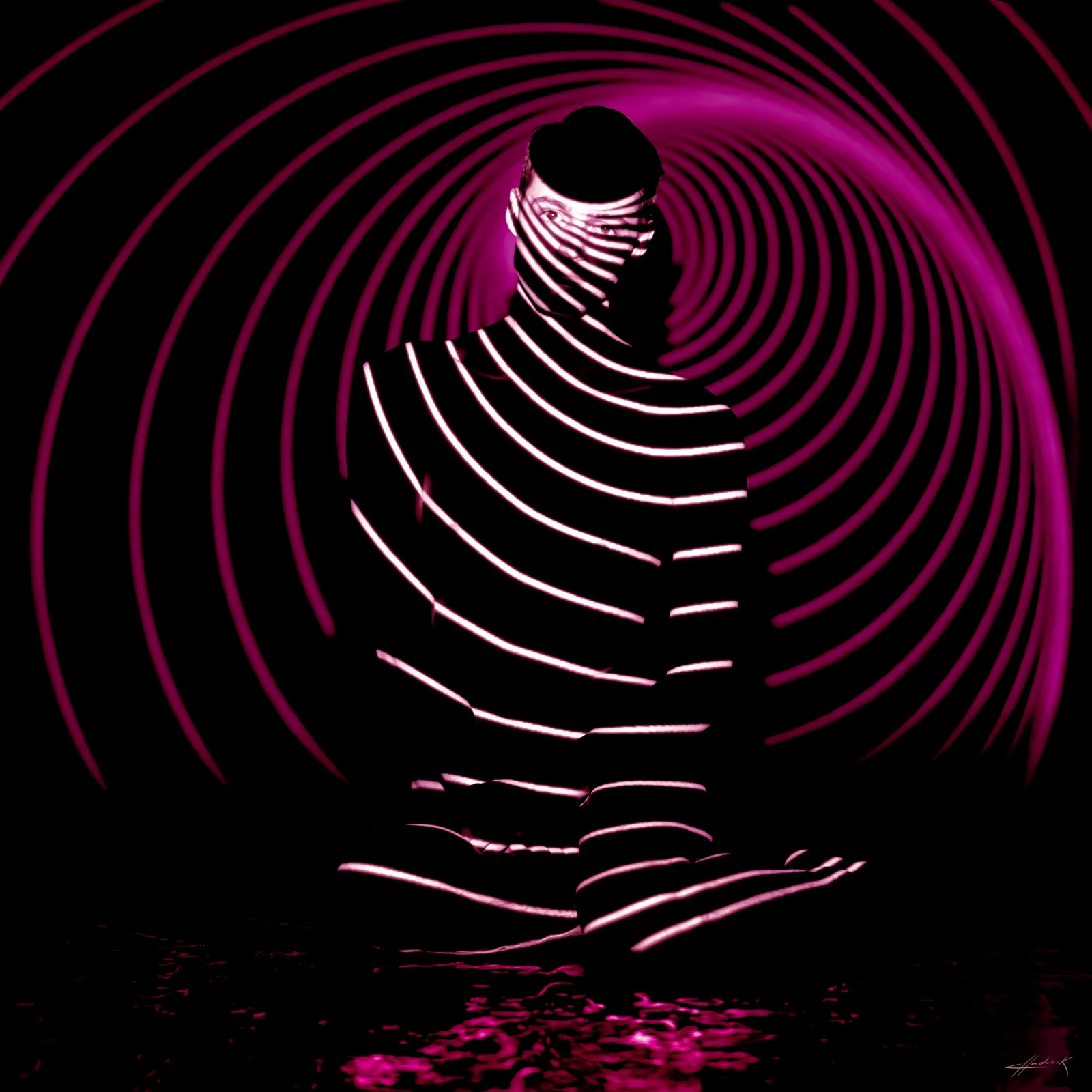
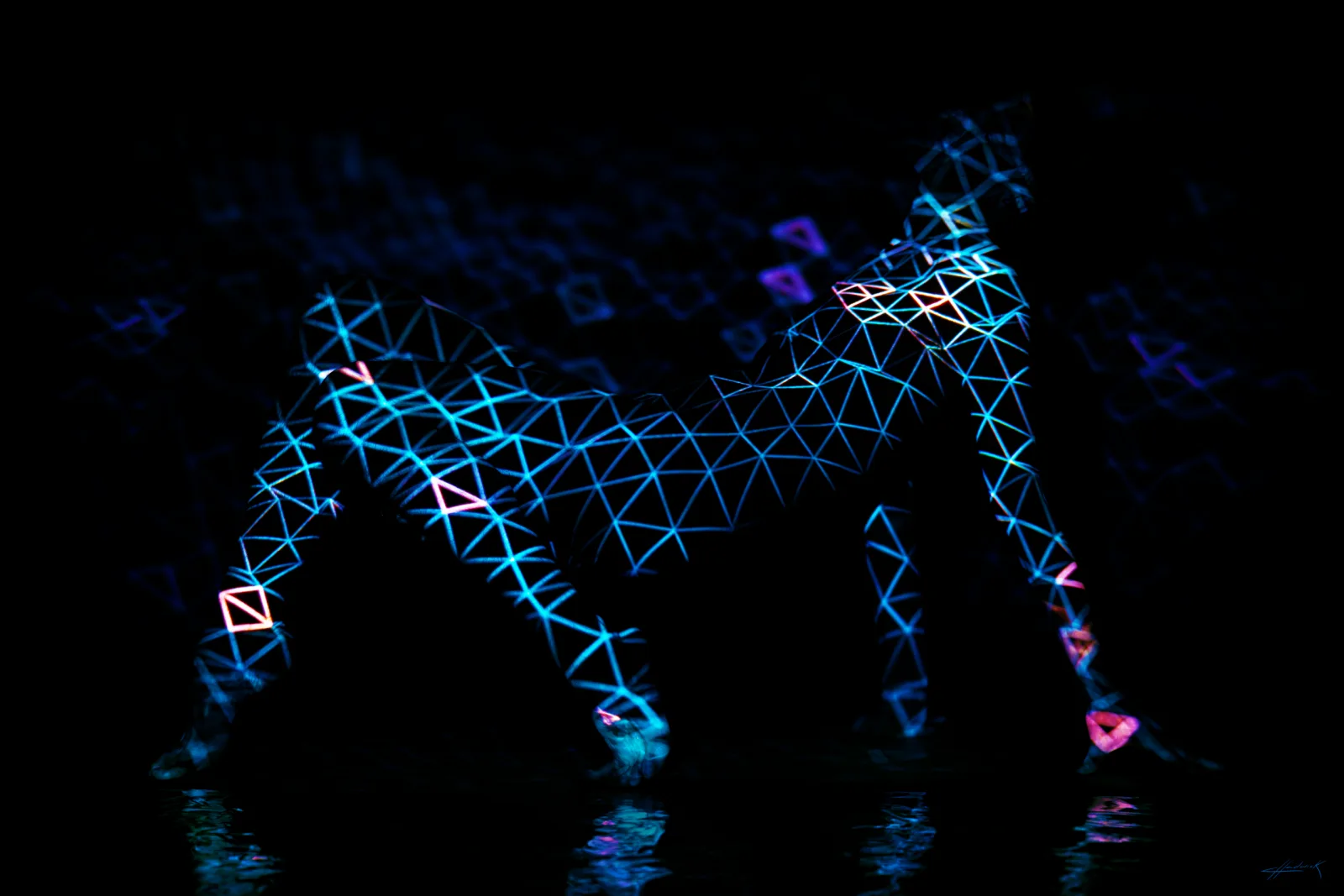
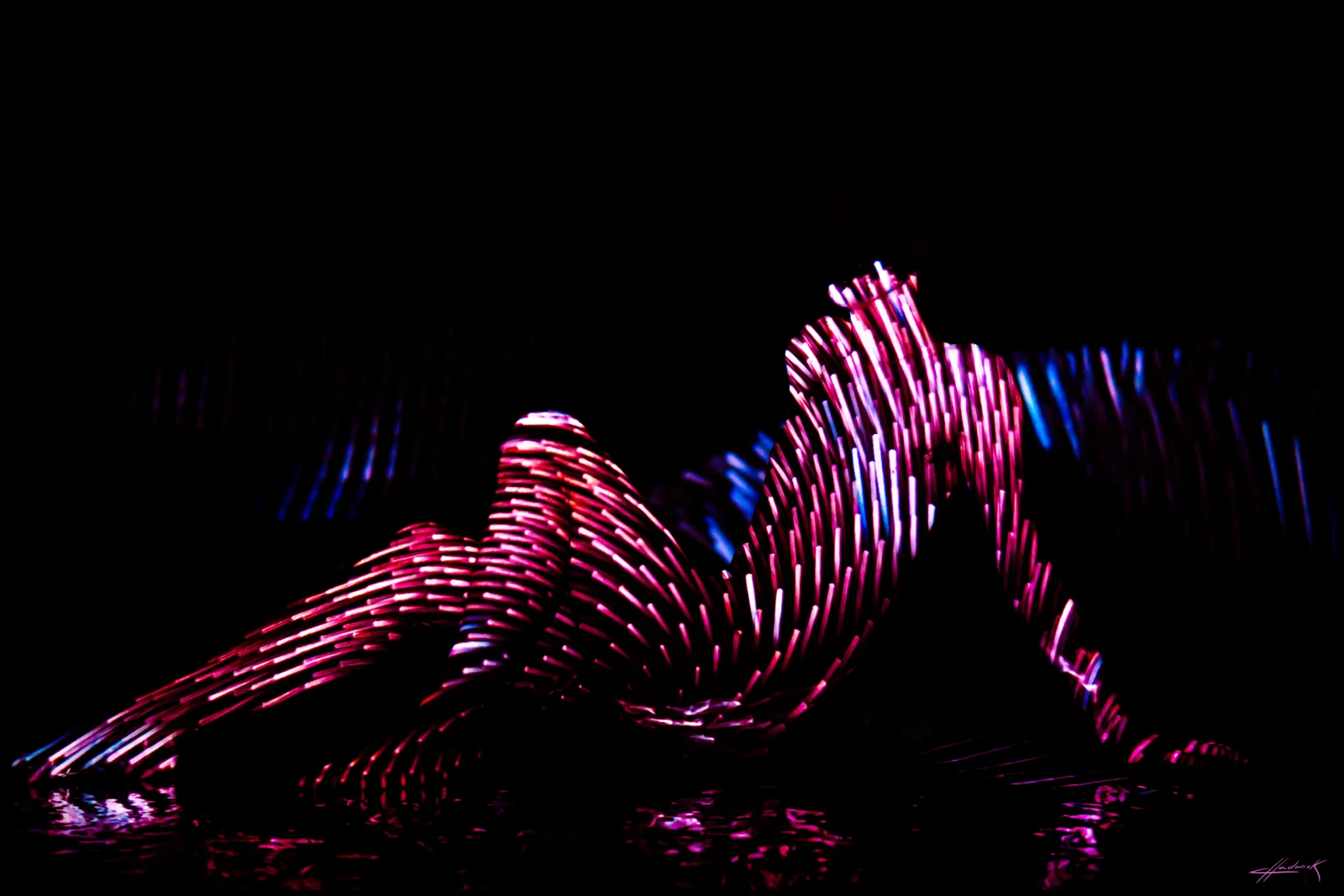
A radial field of dots widens from a single point low on the torso, as if one location pulls everything else into its orbit. The dots wrap the crouched body and blur into soft rings across the background.
Elements turns to matter itself, elemental forces studied at visible and microscopic scale. Unlimited does not mean ordinary.
Fire is still ahead.
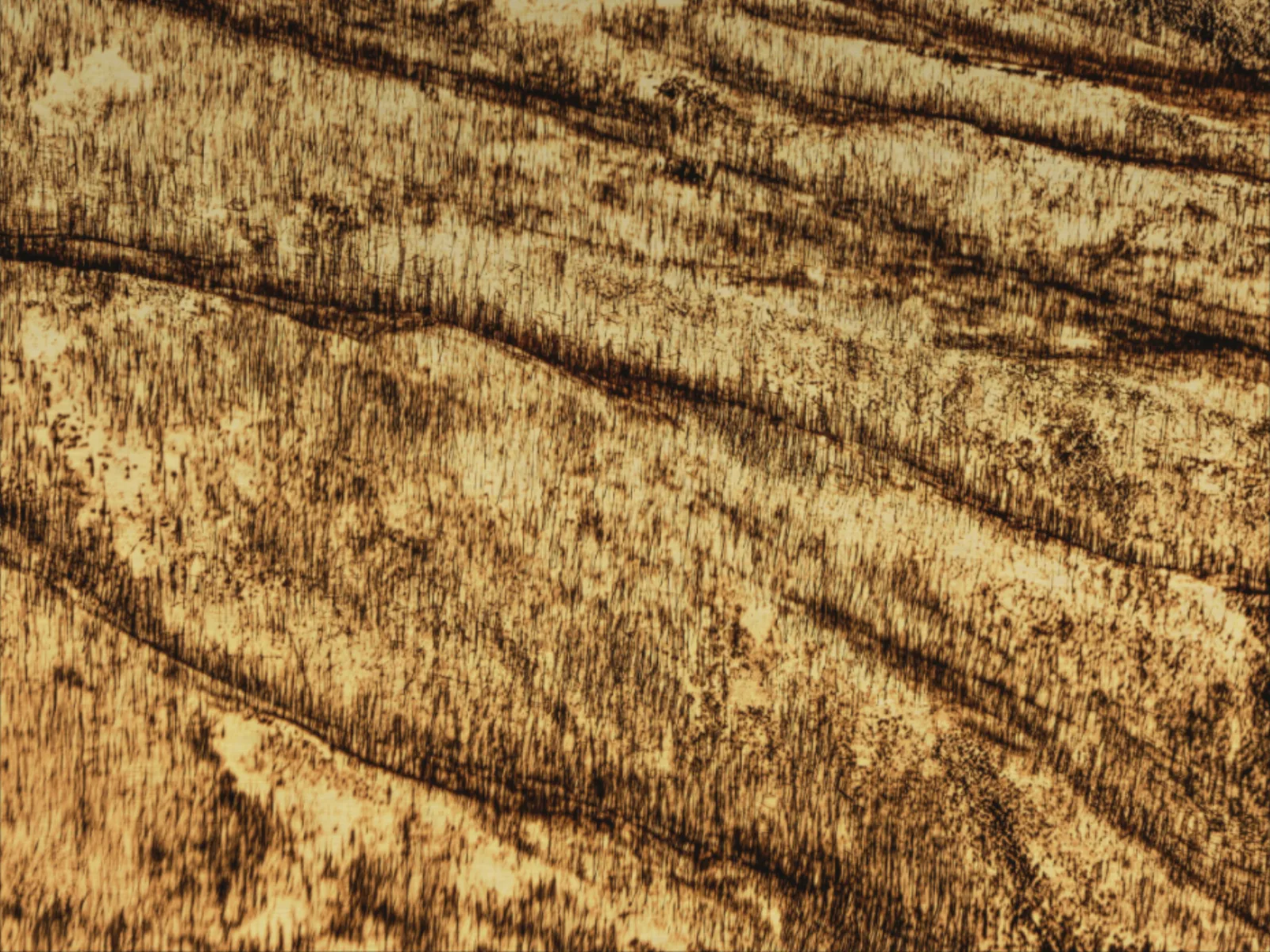
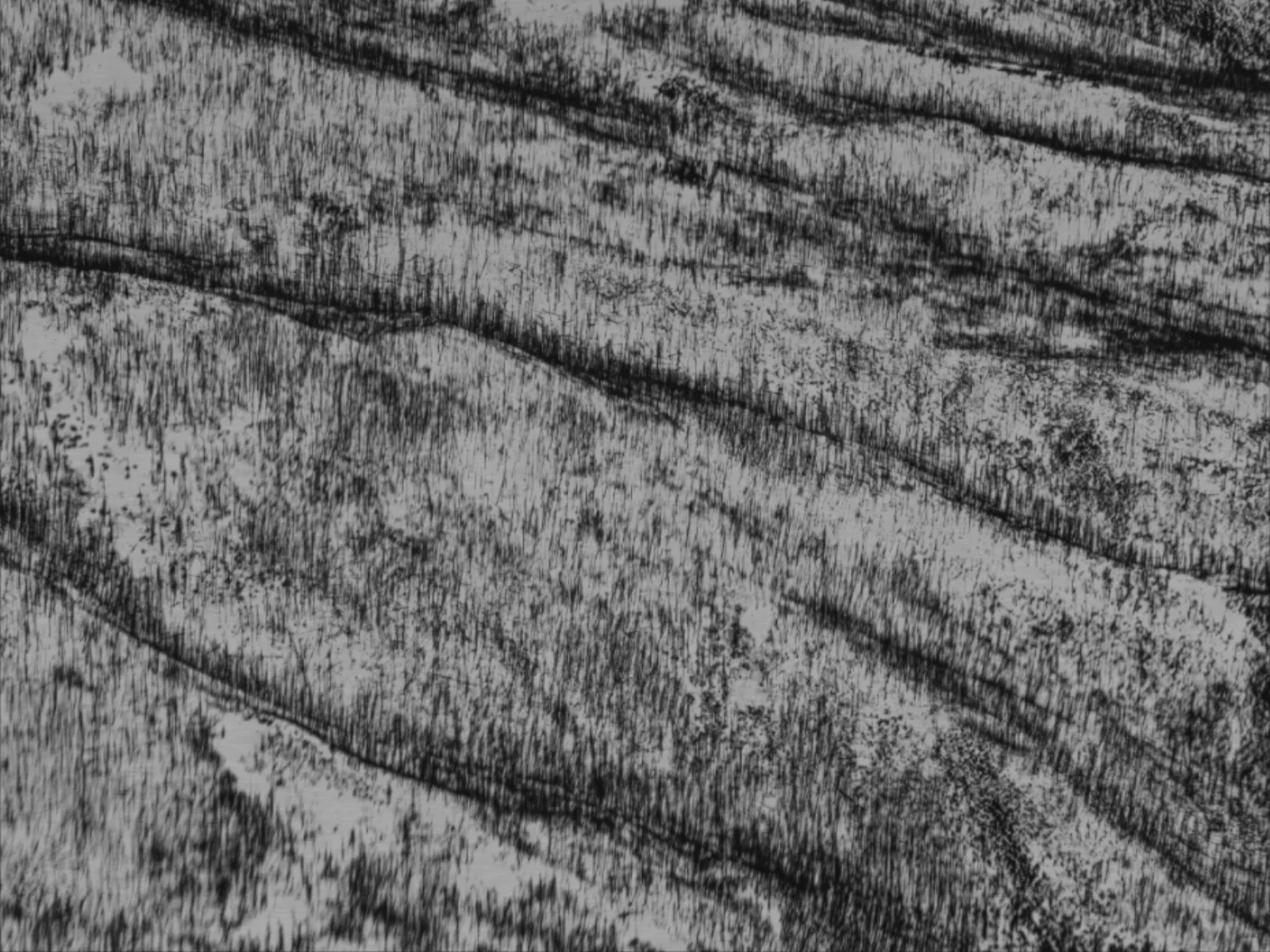
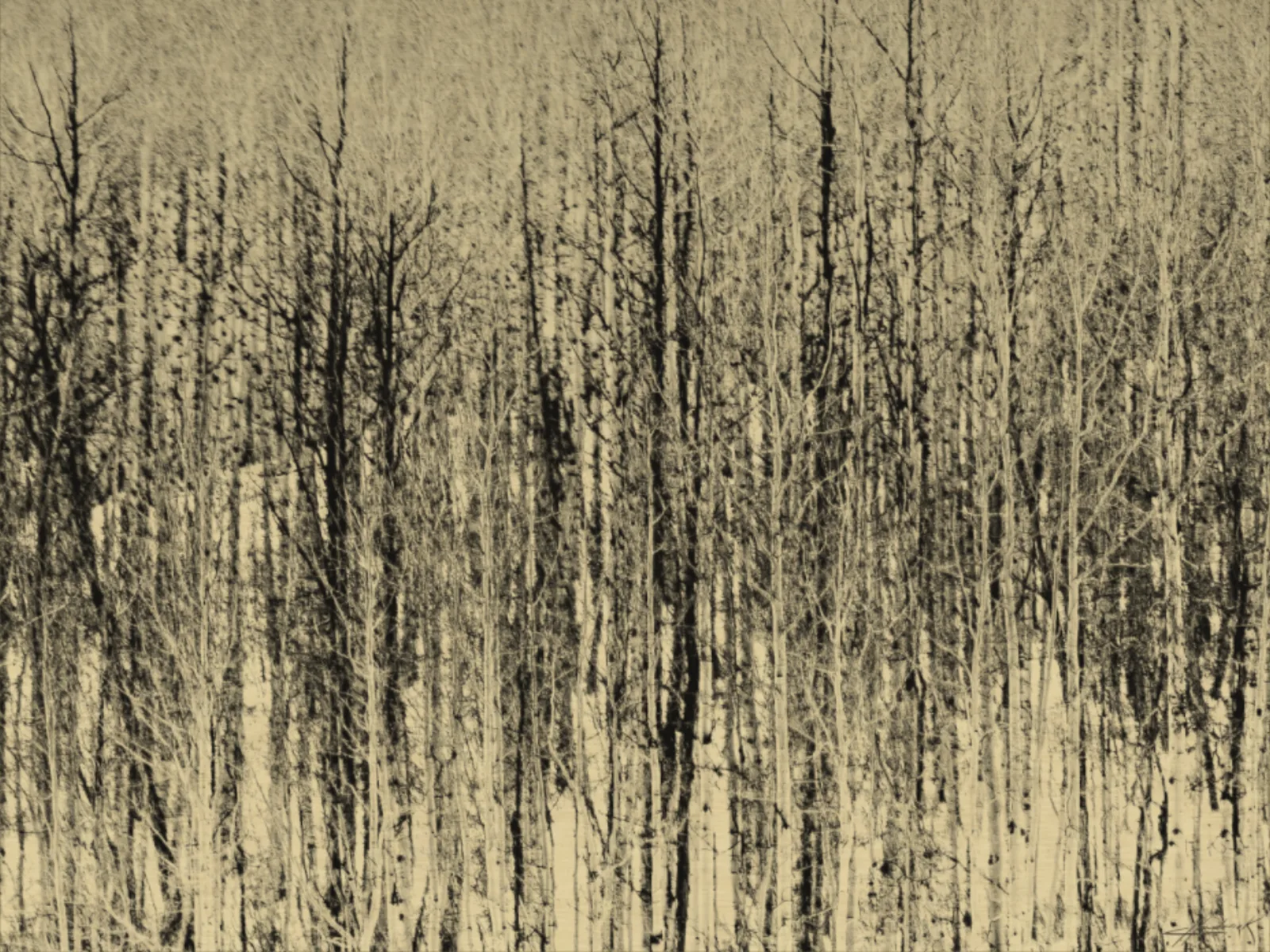
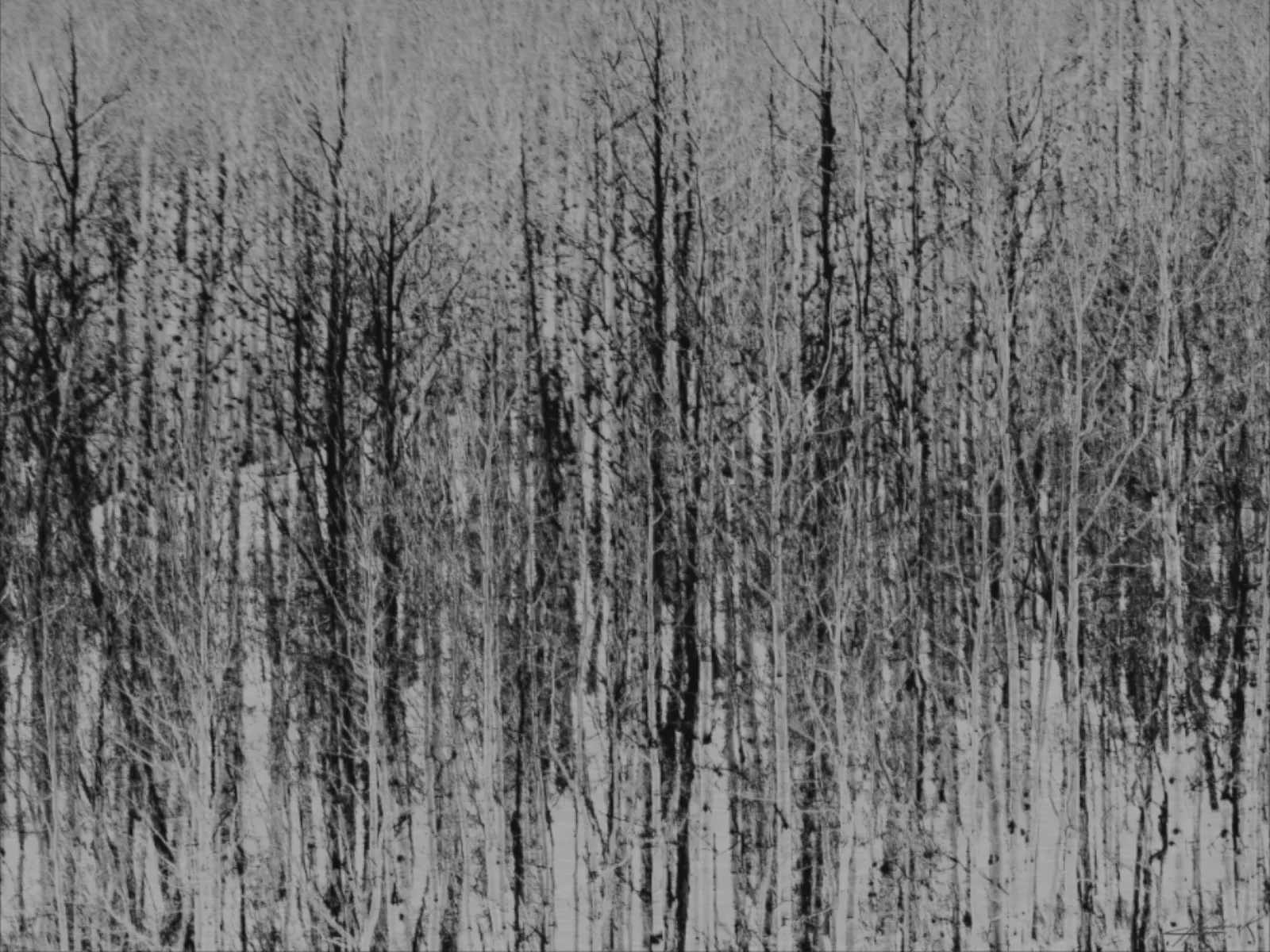
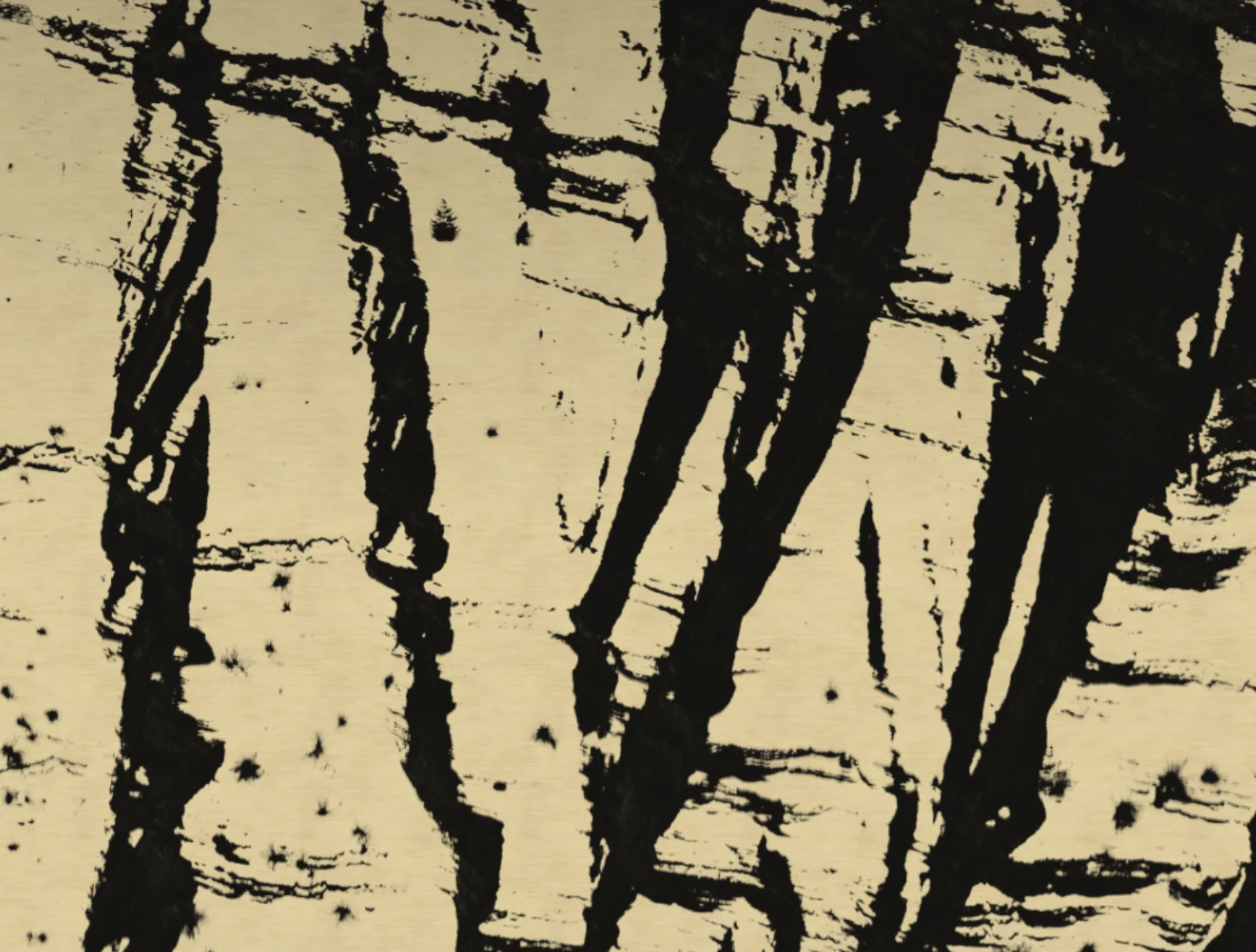
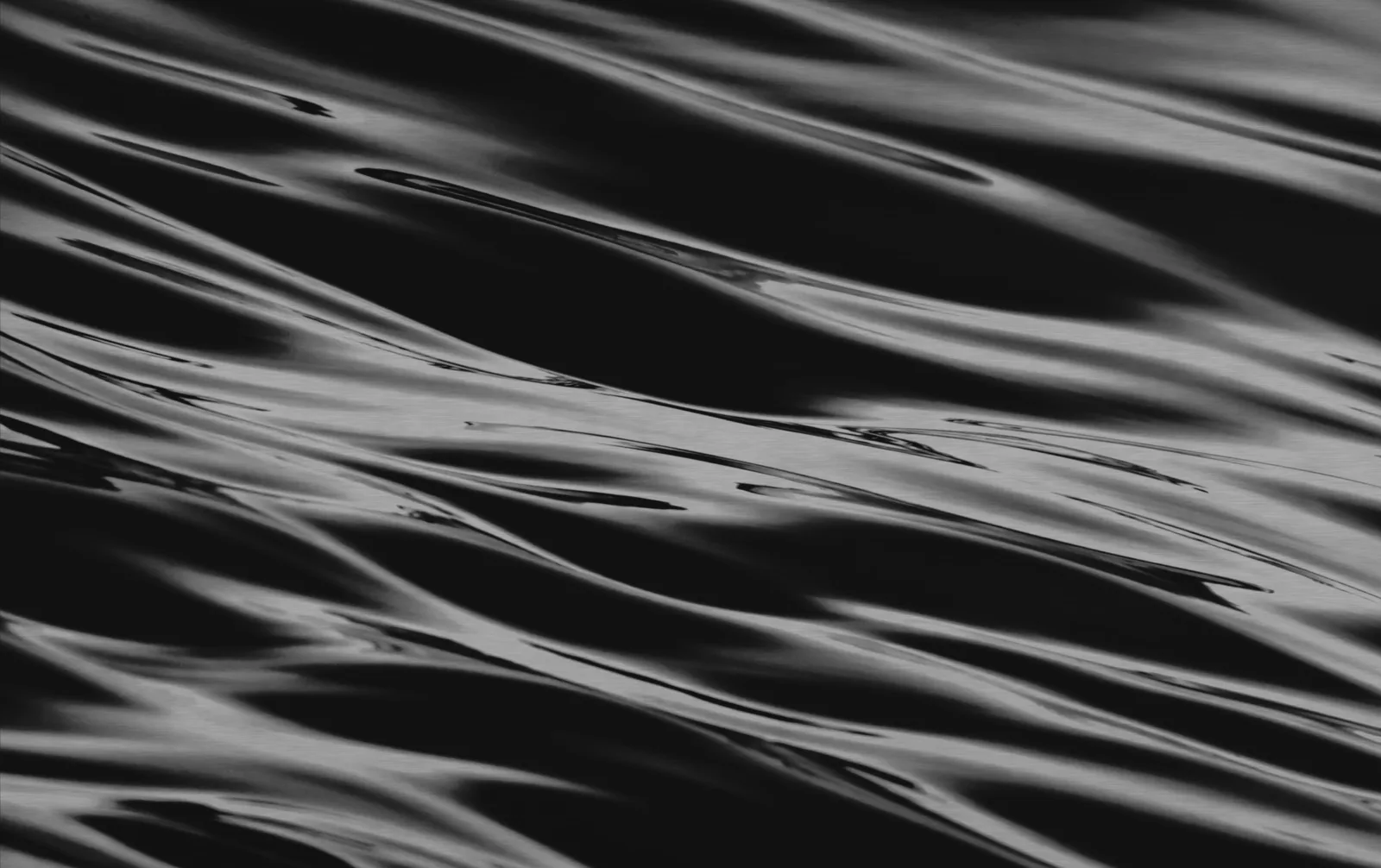
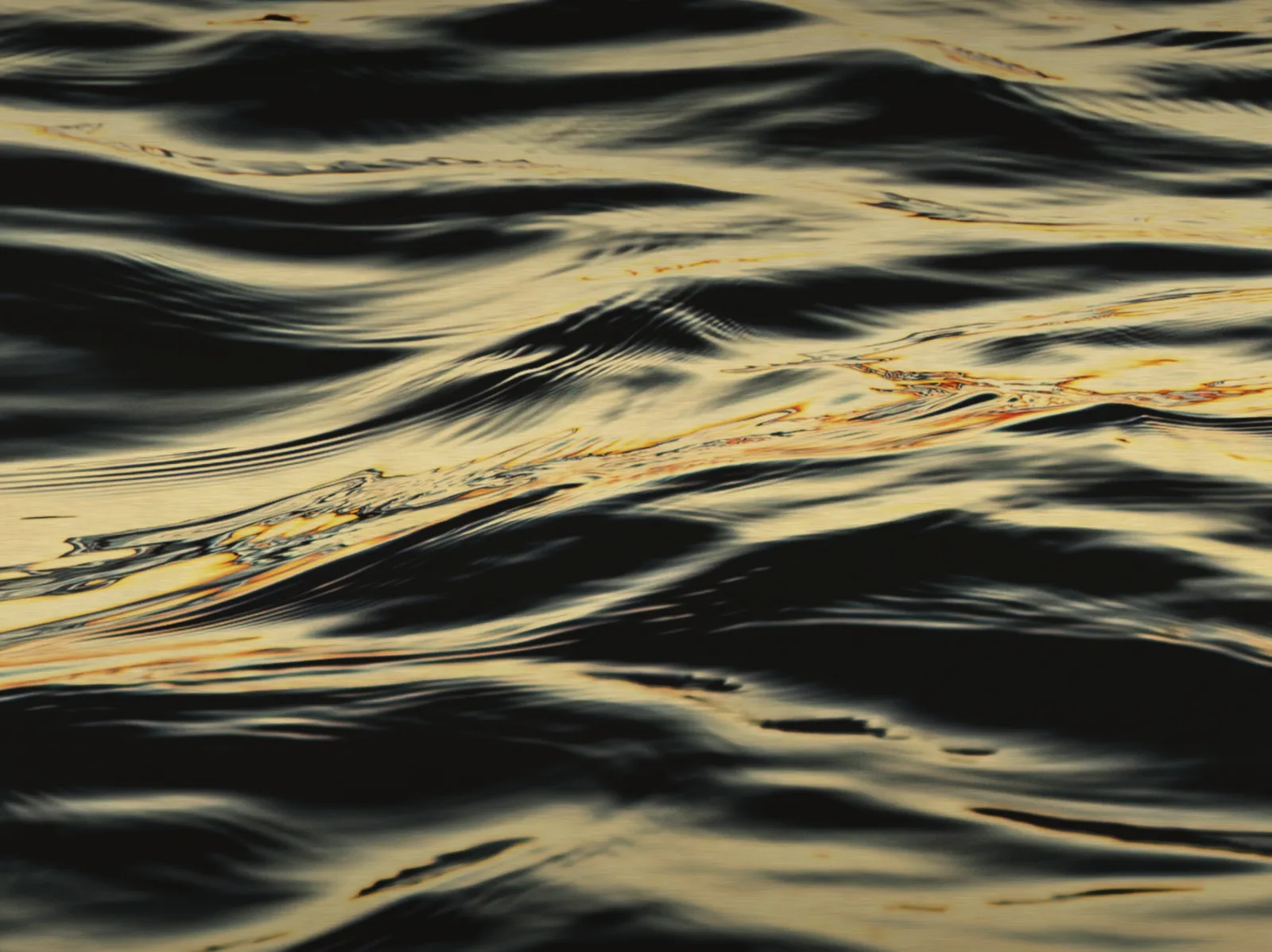
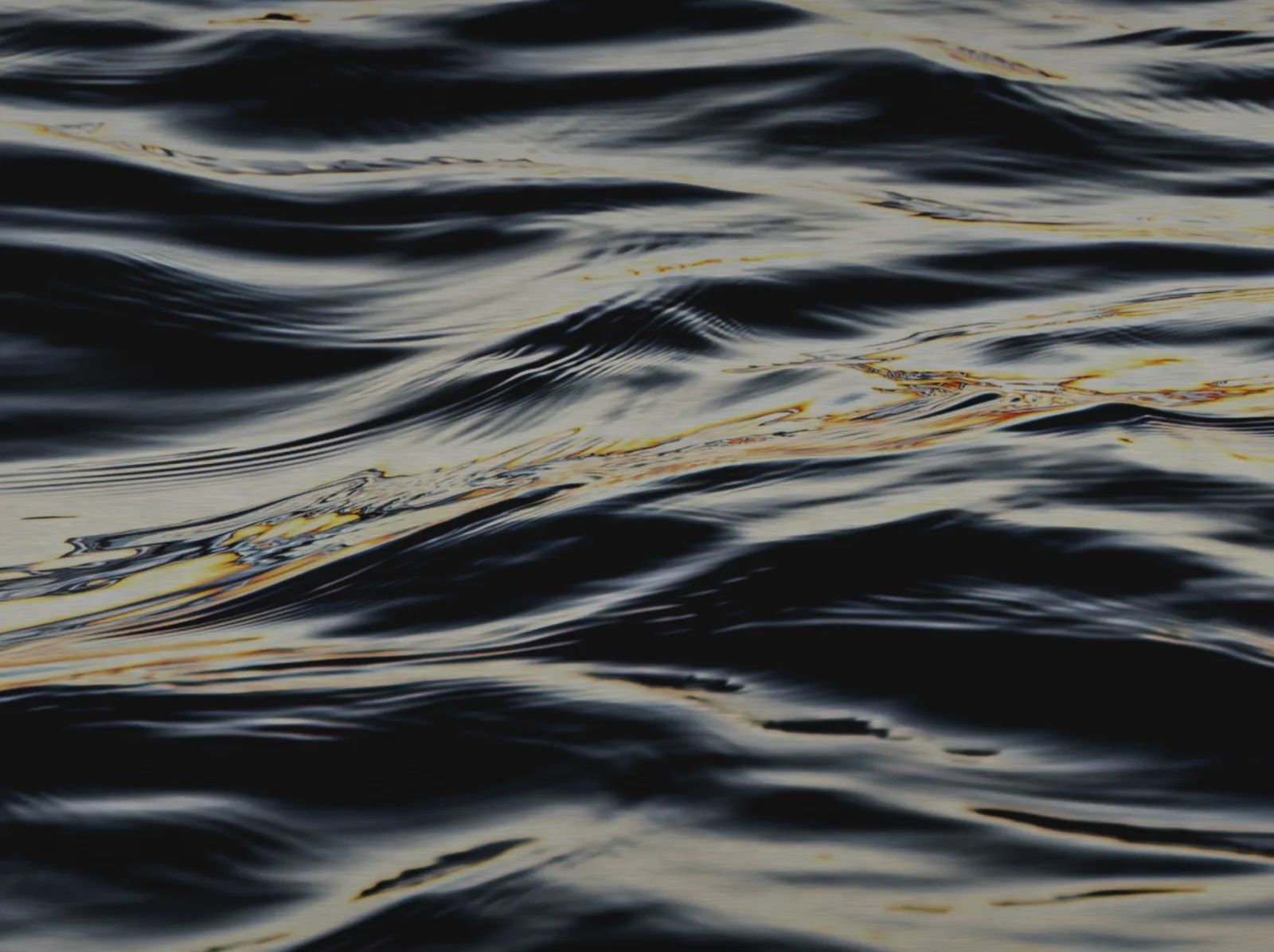
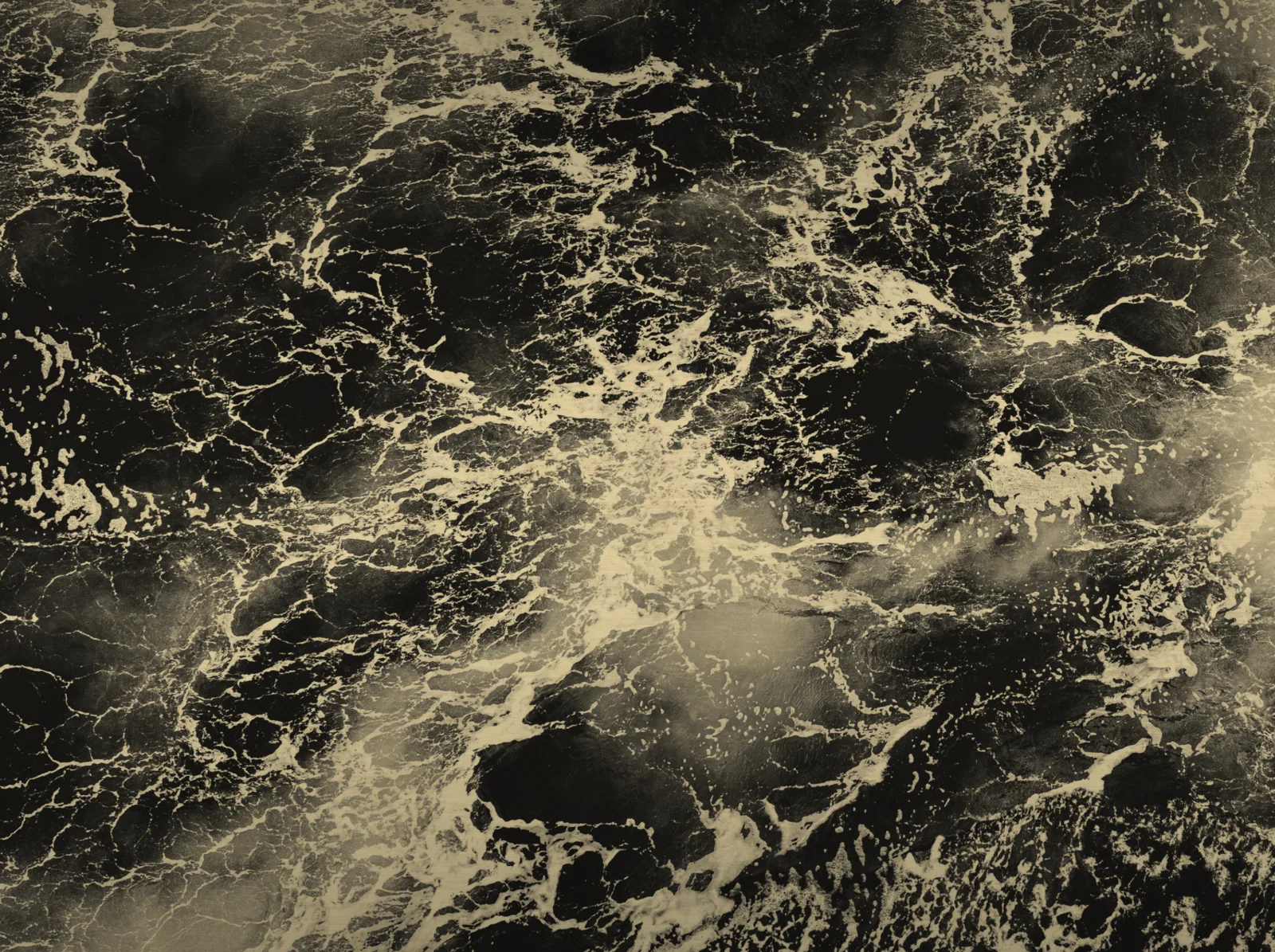
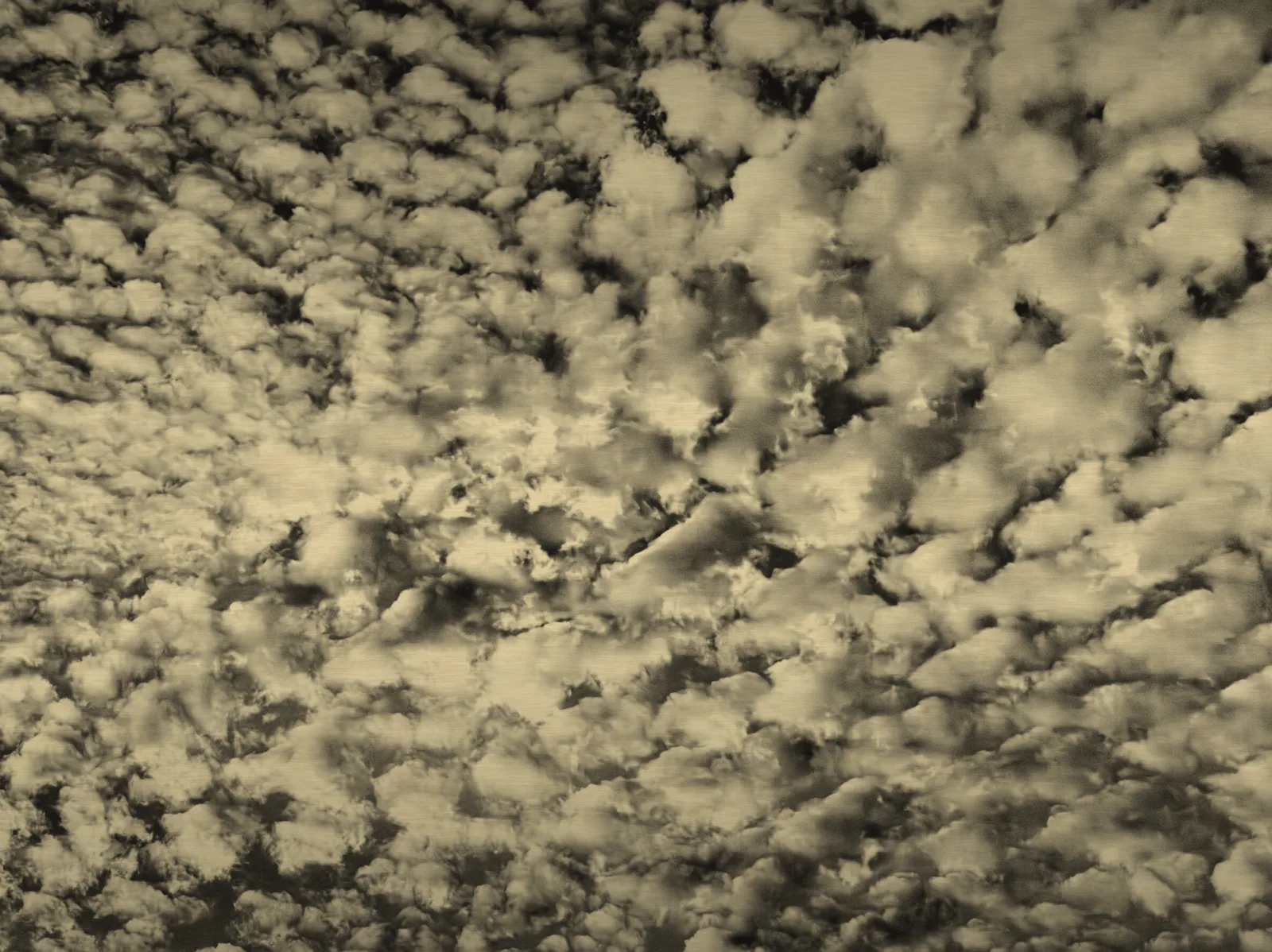
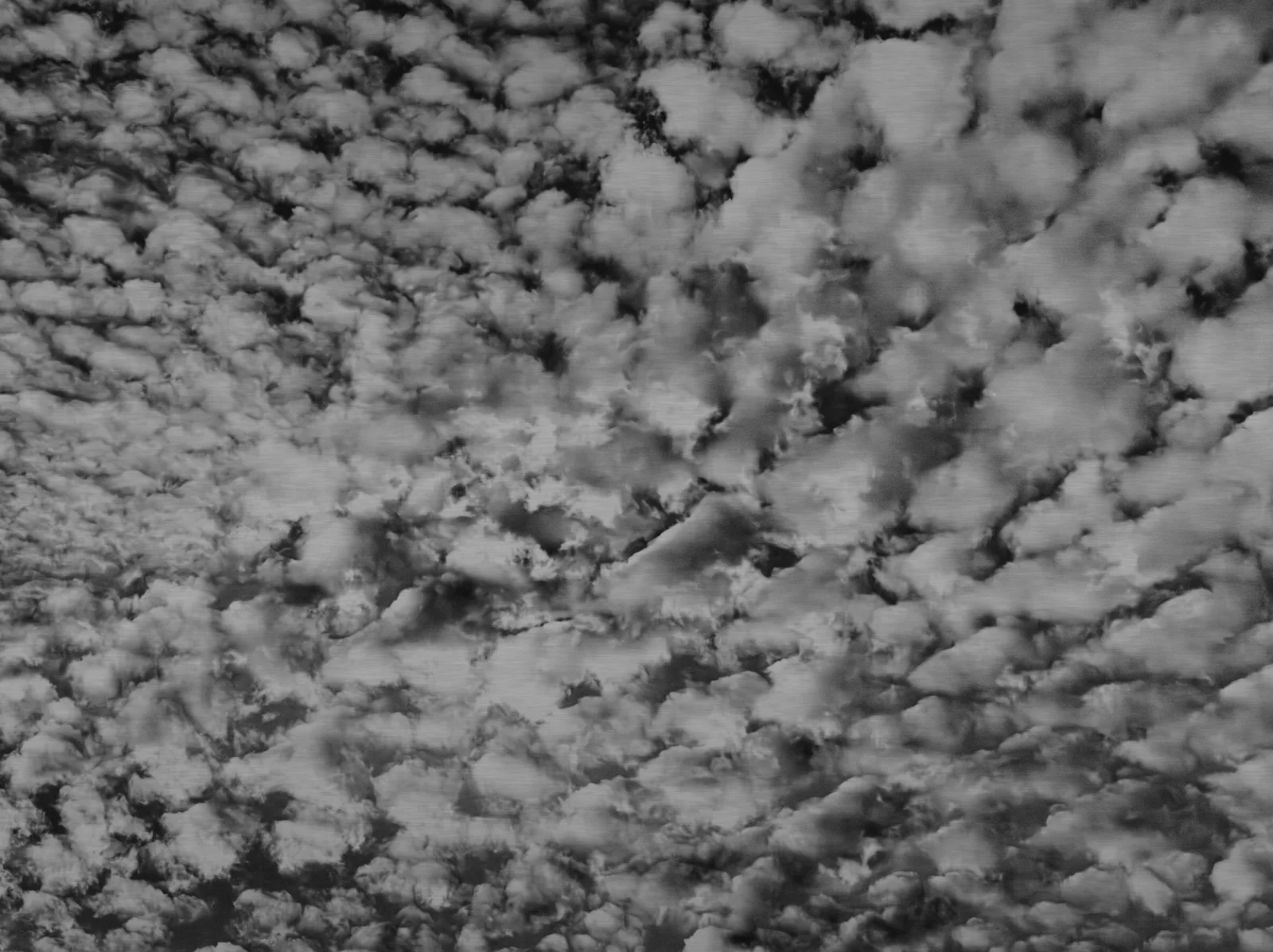
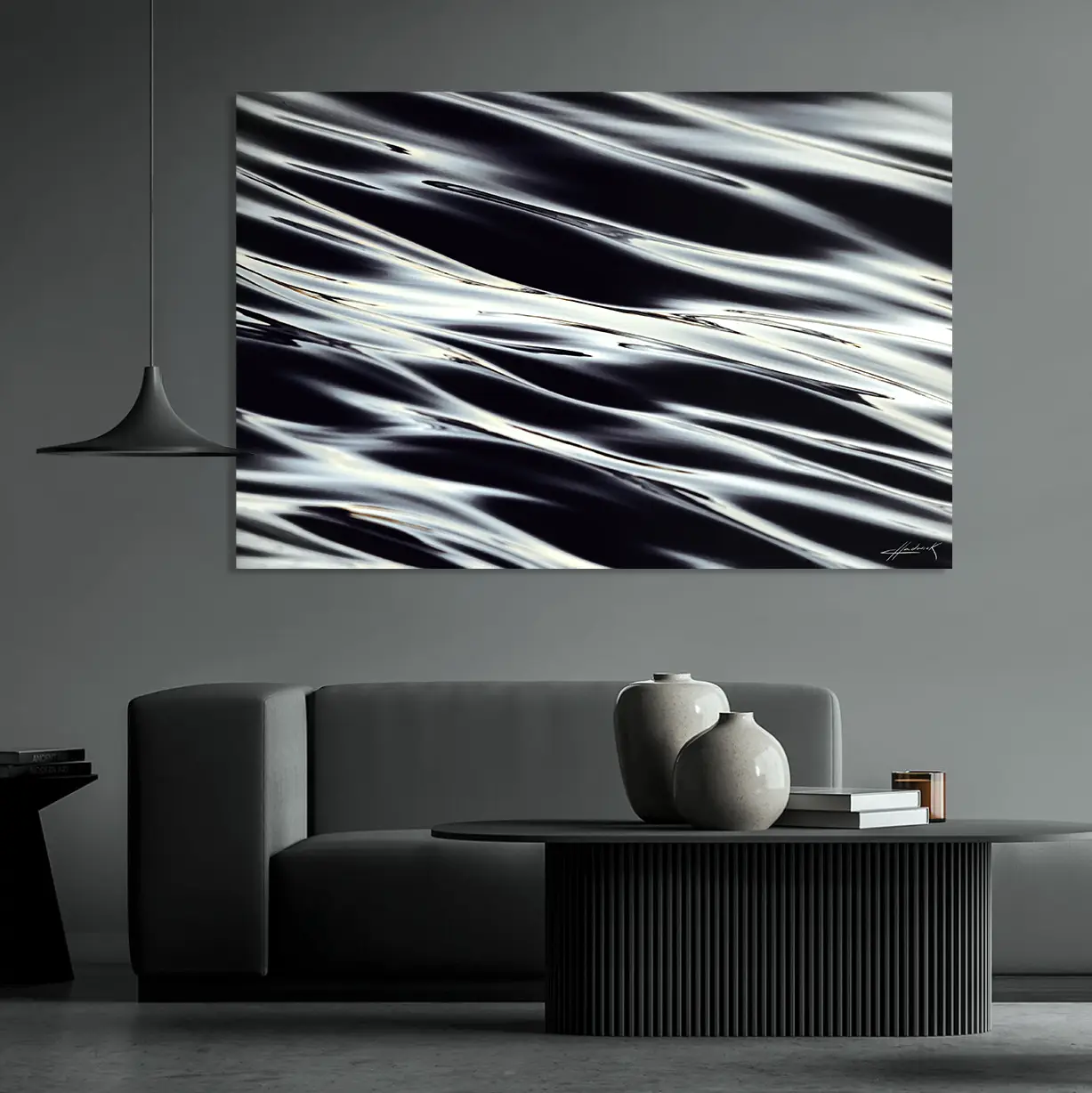
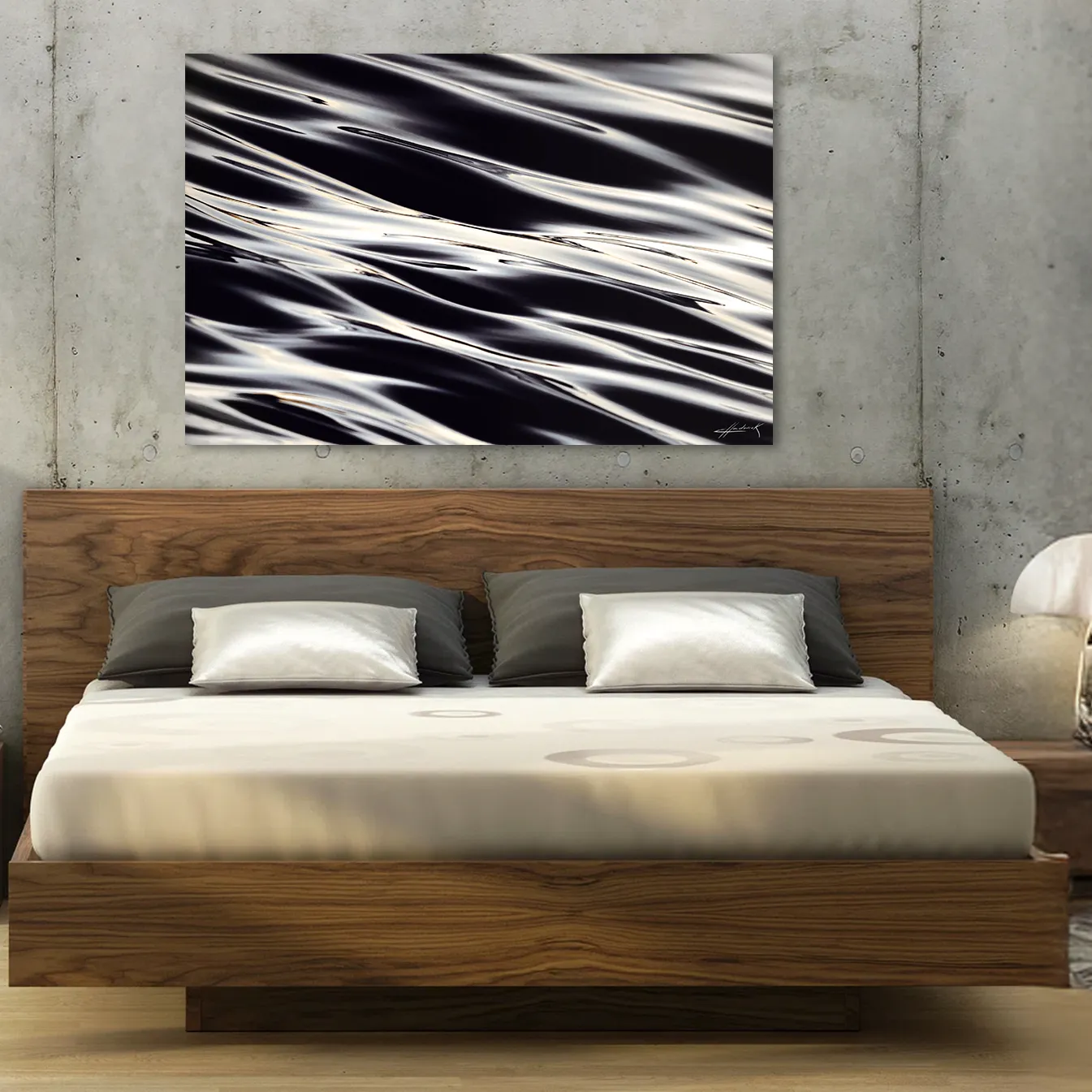
Altocumulus clouds gather in small, rounded cells, each catching light on its crown before losing it in the gap beside it. The brushed metal takes on that same texture, brightest at each cloud's crown and darkest in the gaps between them.
Geometry and halftone dots circle an open question: does life's beginning also mark intelligence's origin?
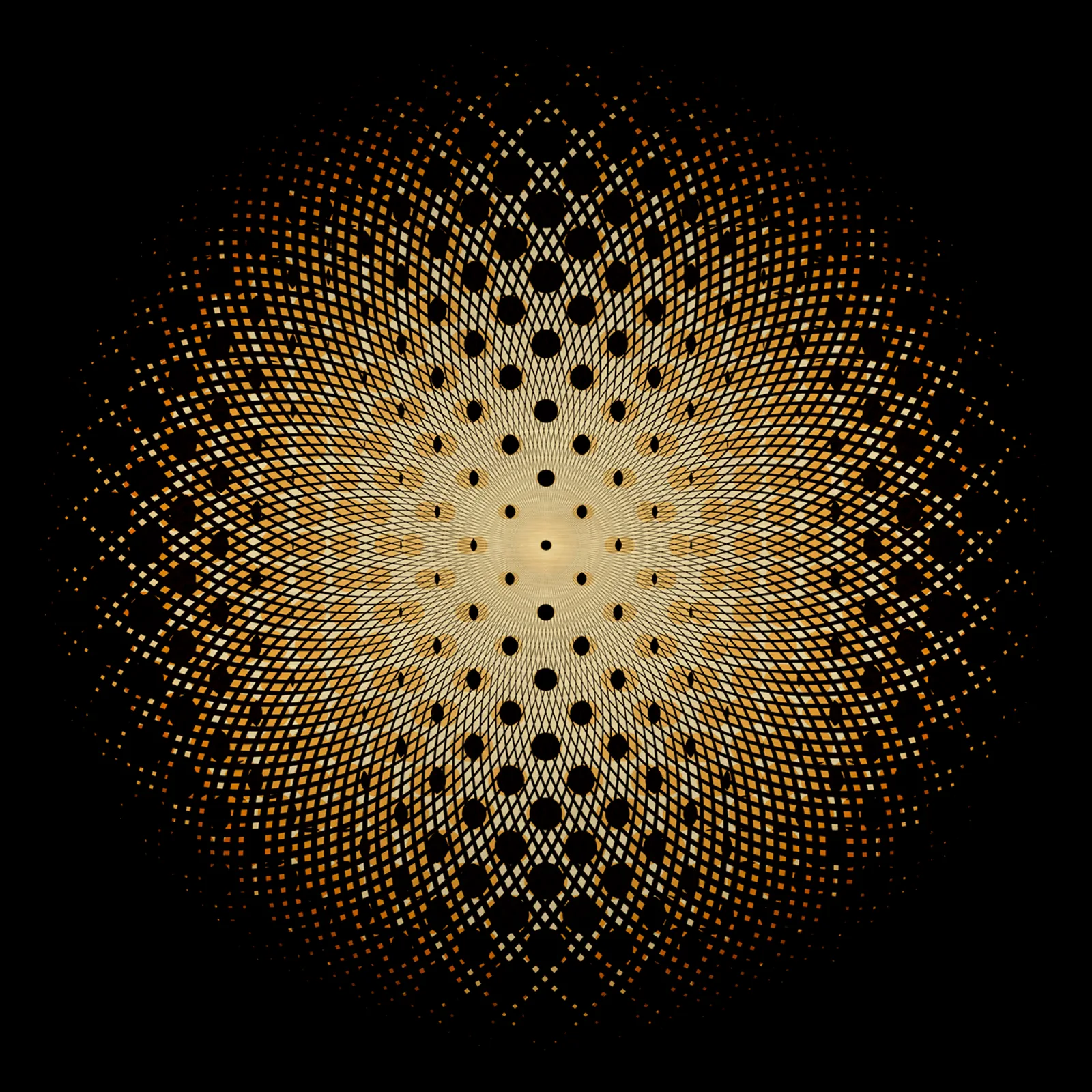
Singularity, to me, is the beginning of life and the beginning of intelligence, seen from two directions, not two separate starts. That's the question underneath the piece: is the point of life to create intelligence? The pattern repeats at every scale, from the very large to the very small, cyclical because it is. I've heard it as music, felt it as love, sensed it as something more mystical than either. All three are correct. It's built the same way: one point, blooming outward into gold and white on brushed metal.
| Size | Edition | Artist's proofs |
|---|---|---|
| 24.5 × 24.5 IN | Edition of 11, 11 available | Artist's proof: none |
| 31.5 × 31.5 IN | Edition of 11, 11 available | Artist's proof: 1, placed |
| 47.5 × 47.5 IN | Edition of 11, 11 available | Artist's proofs: 2 available |